EV Charger Repair in Wichita, KS

When a home EV charger stops working, it usually announces itself at the worst moment — you plug in at night expecting a full battery by morning and wake up to a car that barely charged, an error light, or a breaker that will not stay on. Many charger problems have identifiable causes, and a methodical diagnosis can separate a simple fix from a failing unit. What matters is knowing which symptoms you can safely check yourself and which mean it is time to stop and call an electrician.

This site connects you with an independent local electrician serving the Wichita area who can diagnose and repair home charging equipment and its circuit. This page follows a troubleshooting-first approach: what the common symptoms mean, which basic checks are safe for a homeowner to make, what a professional diagnosis involves, and how to think honestly about repair versus replacement.

Safety first: If your charger, outlet, or panel is sparking, you smell burning, you see scorching or melting, or the charger or plug feels hot to the touch, stop using it immediately. Turn off the charger's breaker, do not plug in again, and call for same-day service. Electrical faults that produce heat, odor, or sparking do not improve on their own, and continued use can damage the charger, the vehicle, or the wiring.

TL;DR
ProblemHome EV chargers fail in recognizable ways — tripping breakers, error lights, going offline, damaged cables, slow charging, or heat and discoloration — and the cause may be in the charger, the circuit, or the panel.
SolutionStart with safe basic checks (breaker position, error indicators, a different charging schedule), then have an electrician diagnose the circuit and the unit methodically to find whether the fix is a setting, a component, a circuit repair, or a replacement.
When to callCall right away for sparking, burning smell, heat, or visible damage; call promptly for repeated breaker trips, persistent error lights, a damaged cable, or a charger that has stopped working altogether.
PROBLEM

A Charger That Stopped Doing Its One Job

Electrical Panel — Wichita EV Charger

A home charger has one task — deliver power safely to your car overnight — and several systems must cooperate: the panel and breaker, the wiring and connections, the charger itself, its cable and connector, and, for smart chargers, its network connection and software. A failure in any one produces symptoms that can look similar at first glance, which is why guessing is unreliable. A tripping breaker can mean an overloaded circuit, a failing breaker, a ground fault, or an internal charger fault. Good repair work starts with diagnosis, not parts swapping.

The sections below cover the symptoms Wichita homeowners most commonly report, what each typically means, and what you can safely check before calling. If your charger is beyond economical repair, the EV charger replacement page explains what replacement involves — and if the root cause is capacity rather than the charger, the electrical panel upgrade page covers that path.

Call Now
Connect with a local EV installer

Common Symptoms and What They Usually Mean

Breaker Keeps Tripping

A charger breaker that trips occasionally and then repeatedly is one of the most common repair calls. Possible causes include a charger drawing more current than the circuit is set for — for example, a charger configured at a higher amperage than its breaker and wiring support — a weakening breaker, loose connections creating heat, a ground fault detected by the charger's internal protection or a GFCI breaker, or a developing fault inside the charger itself.

Safe homeowner checks: confirm the charger's amperage setting in its app or on the unit matches what you were told at installation, and note whether trips happen at a particular time, such as when air conditioning or other large loads are running. Beyond that, repeated tripping is a call-an-electrician symptom. A breaker that trips is doing its job — resetting it repeatedly without finding the cause defeats the protection.

Red or Error Lights

Permit Docs — Wichita EV Charger

Most home chargers communicate through indicator lights. A solid or flashing red light generally signals a fault, but the specific meaning varies by brand and model — patterns and blink counts encode different faults such as ground faults, overheating, relay problems, or vehicle communication errors.

Safe homeowner checks: look up the light pattern in your charger's manual or app, note the exact pattern, and try one power cycle by turning the charger breaker off for a minute and back on, only if there is no heat, odor, or visible damage. If the error returns, record the pattern and any message in the app to share with the electrician. That information genuinely speeds up diagnosis.

Charger Offline or Wi-Fi Problems

Garage Setup — Wichita EV Charger

Smart chargers depend on a home Wi-Fi connection for scheduling, monitoring, and sometimes for basic operation settings. A charger that shows offline in its app may have lost its network connection due to a router change, a new Wi-Fi password, weak signal in the garage, or a software issue.

Safe homeowner checks: confirm your home internet is working, check whether other devices reach the router from the garage, and restart the charger and router once. Many offline chargers continue to charge at their last settings even while offline — if the car is charging normally and only the app connection is lost, the issue is connectivity rather than electrical. If the charger will not charge at all, or the offline state persists after basic network checks, an electrician or the manufacturer's support path can determine whether the unit's communication hardware is failing.

Damaged Cable or Connector

Charging Cable — Wichita EV Charger

Cables live a hard life: they are run over, pinched under garage doors, dragged across concrete, left in standing water, and chewed by pests more often than owners expect. Damage shows up as cuts or crushed sections in the cable jacket, a connector that no longer latches, bent or corroded connector pins, or a handle that feels unusually warm during charging.

This is a stop-and-call symptom when damage is visible. A damaged cable or connector is generally not a field-repairable part — for most home chargers, cable and connector damage means replacing the unit, because the cable assembly is integral to the charger's safety design and is not sold as a standard replacement part. An electrician can confirm whether your specific model has any manufacturer-supported option and inspect the circuit for related damage. Never tape, splice, or continue using a cable with a damaged jacket or connector.

Charging Slower Than Expected

Energy App — Wichita EV Charger

Slow charging has several explanations, and not all are faults. The vehicle limits charge rate based on battery temperature, state of charge, and its onboard charger capacity. The charger may be set to a lower amperage than you expect, load management may be reducing output while other home loads run, or the vehicle may have a schedule or charge-limit setting in effect.

Safe homeowner checks: compare the charge rate in the vehicle or app against the charger's rating, check vehicle-side limits and schedules, and note whether slowness happens only at certain times. If the rate is far below both the charger's and the vehicle's capability with no setting explaining it, that points to a charger or circuit issue worth diagnosing.

Heat, Discoloration, or Odor

Connector Compare — Wichita EV Charger

Heat at the plug, outlet, or charger body, discoloration around an outlet, a warped plug, or any burning smell is the most serious category of symptom, indicating a poor connection, an overloaded component, or a failing part.

Do not continue charging. Turn off the breaker for the charger circuit, leave the equipment unplugged, and call for same-day service. If the installation is a plug-in unit on a NEMA 14-50 outlet, the outlet is a common place for connection wear to show up, and the electrician will inspect the outlet, plug, breaker, and wiring together — heat damage at one component often means neighboring components need attention too.

What a Professional Diagnosis Involves

Nema Outlet — Wichita EV Charger

When an electrician diagnoses a charger problem, the work is systematic rather than guesswork:

  1. Symptom history. When the problem started, whether it is constant or intermittent, recent changes — a new vehicle, a router change, panel work, a storm — and any error patterns you recorded.
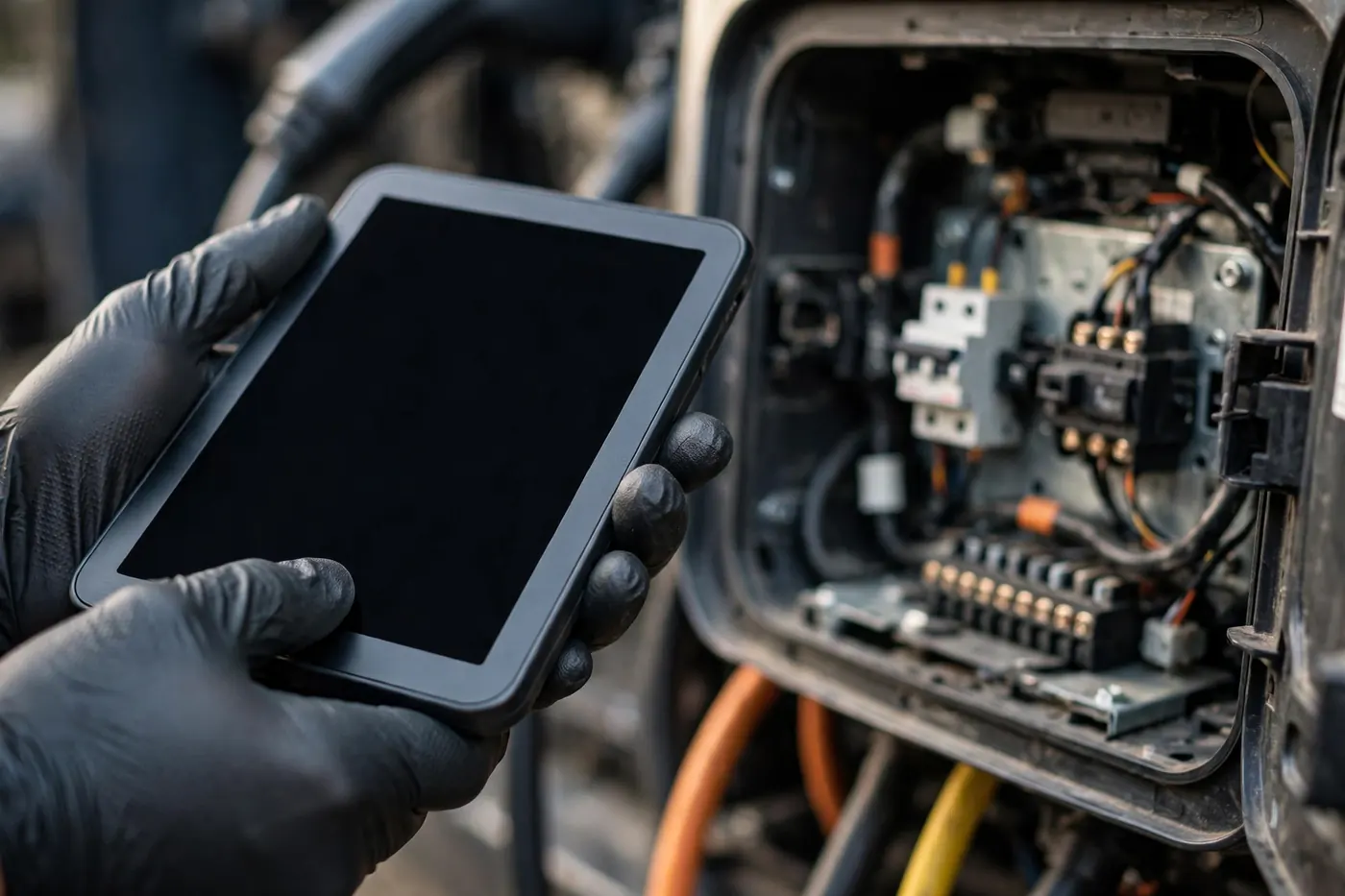
  2. Visual inspection. The charger, cable, connector, outlet or hardwired connection, breaker, and panel are checked for heat damage, corrosion, loose terminations, and physical damage.
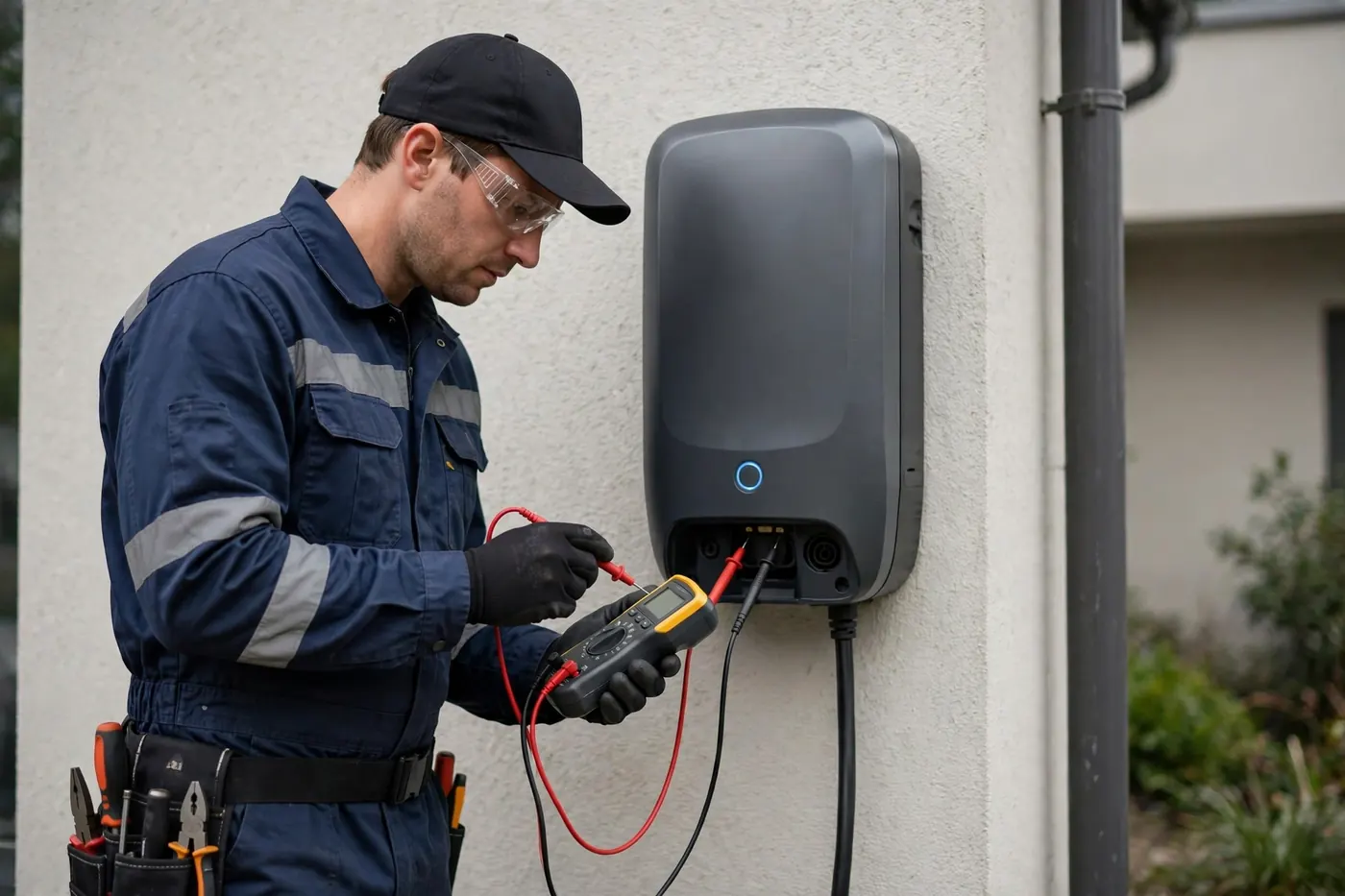
  3. Circuit testing. Voltage, grounding, and breaker performance are verified, and the circuit is checked against the charger's configured amperage. This determines whether the fault lives in the house wiring or in the unit.
  4. Charger testing. The unit is tested under load where possible, error indicators are interpreted for that model, and settings — amperage, schedules, network configuration — are reviewed.
  5. Findings and options. You get a plain-language explanation of what failed, whether repair is practical, and what replacement would involve if it is not. Pricing is discussed directly with the electrician; this referral site does not set service prices.

This process also catches problems that are not the charger at all — a misconfigured charger on an undersized circuit is really a capacity issue, and the durable fix may be a setting change, a circuit correction, or panel work. The panel capacity guide explains how capacity is evaluated.

SOLUTION

Repair What Makes Sense, Replace What Does Not

Electrician Work — Wichita EV Charger

Honest repair advice means acknowledging that not every charger should be repaired.

Repairs that commonly make sense include correcting charger settings, replacing a failed breaker, repairing or replacing a worn outlet on a plug-in installation, fixing loose or heat-damaged terminations before they damage more components, resolving grounding issues, and restoring network configuration on a smart charger whose charging hardware is sound.

Situations where replacement is usually the practical path include a damaged cable or connector, internal charger faults on an older unit, a charger that has suffered clear heat damage, and units whose manufacturer support or parts availability has ended. In those cases, repair money is often better spent toward a new unit with a fresh service life — see EV charger replacement for how the swap works and the guide on when to replace or upgrade a charger for decision factors.

An electrician connected through this site will give you the diagnosis first and let the findings drive the recommendation. If the charger is fine and the circuit is the problem, you will hear that. If the circuit is fine and the charger has failed, you will hear that instead.

Brands and Charger Types Serviced

Wall Charger — Wichita EV Charger

At a general level, the electricians connected through this site work on the common categories of home charging equipment in Wichita homes: Tesla wall units, and universal chargers using the J1772 connector or the newer NACS connector. Hardwired and plug-in Level 2 units are both serviced, as is the underlying circuit for Level 2 EV charger installation work, Tesla charger installation setups, and residential EV charger installation projects. If your charger is an older or less common model, mention the brand and model when you call — it helps the electrician arrive prepared with its error code documentation.

Preventing the Next Failure

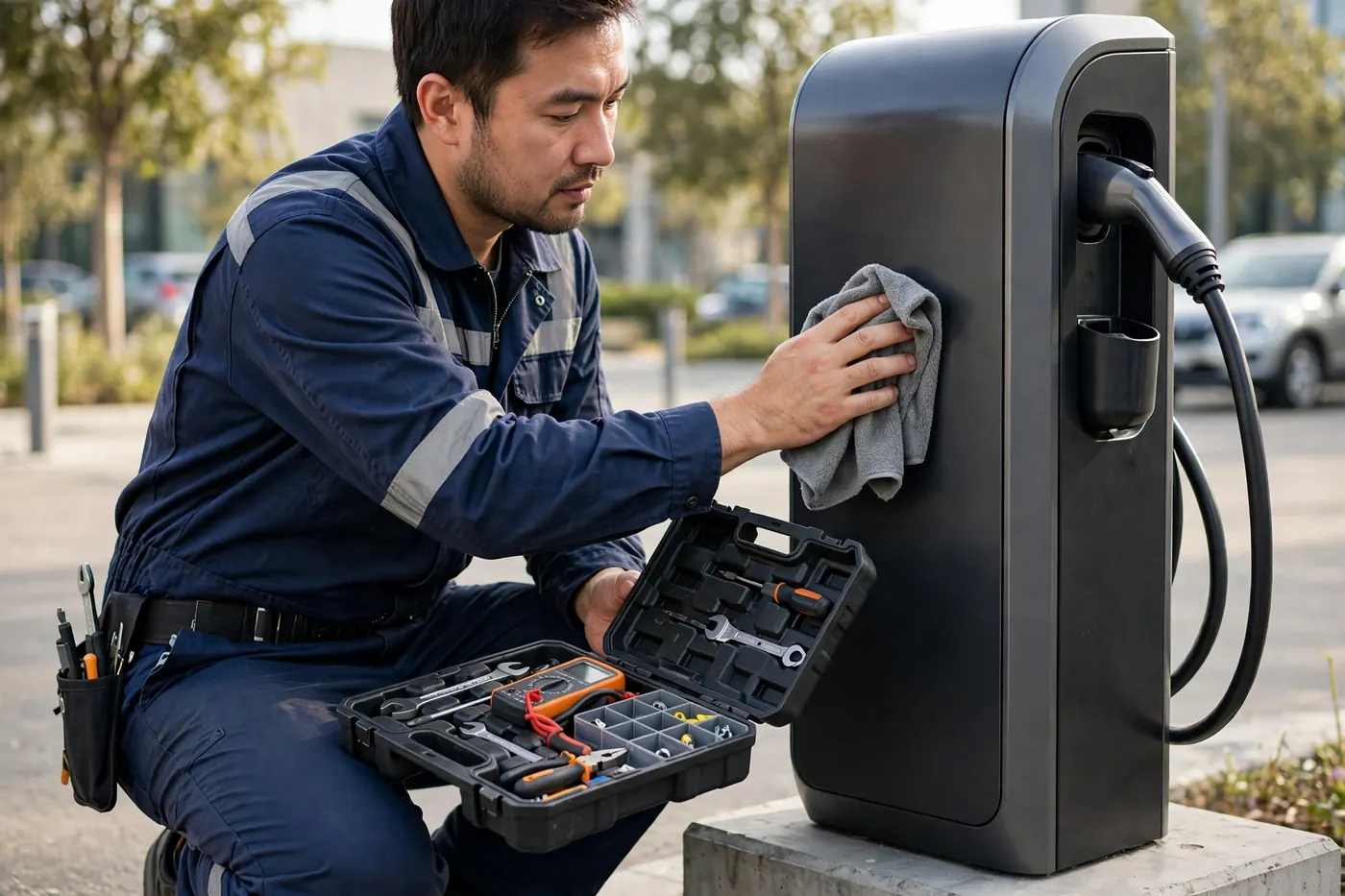
Some failures are random, but many follow patterns that basic upkeep can interrupt. Keep the cable coiled loosely rather than kinked, keep the connector holstered or capped so contacts stay clean and dry, avoid driving over the cable, and keep the area around the charger clear. Periodically check the plug, outlet, and cable — catching warmth, discoloration, or jacket damage early turns a potential hazard into a routine service call. The EV charger maintenance guide covers a simple upkeep routine. If your charger was installed before you bought the home and you have no documentation for it, a one-time inspection is also worthwhile: the electrician can verify the breaker size matches the charger's setting and check terminations.

How This Site Helps

This site is a referral service, not a direct service company. It connects you with an independent local electrician in the Wichita area who diagnoses and repairs EV chargers and their circuits. You discuss findings, options, scheduling, and pricing directly with the electrician. For urgent symptoms — sparking, burning smell, heat, or visible damage — describe them when you reach out through the contact page so the urgency is clear. You can also review all services and locations served.

Repair Installation — Wichita EV Charger

Frequently Asked Questions

Why does my EV charger keep tripping the breaker?

Repeated tripping usually means the circuit is being asked for more than it can safely deliver, the breaker itself is weakening, a ground fault is present, or the charger has an internal fault. A frequent correctable cause is a charger configured for a higher amperage than its breaker and wiring support. Because a tripping breaker is a protective device doing its job, the right response is diagnosis rather than repeated resets — an electrician will test the circuit and the unit to find which side of the connection the fault is on.

What does a red light on my home charger mean?

A red light indicates a fault, but the exact fault depends on the brand, model, and light pattern — solid versus flashing and blink counts carry different meanings, ranging from ground faults and overheating to relay or vehicle communication problems. Check your charger's manual or app for the pattern, write down what you see, and share it when you call. If the red light is accompanied by heat, odor, or visible damage, stop using the charger and turn off its breaker rather than troubleshooting further.

Can a damaged charging cable be repaired or does the unit need replacement?

In most cases, a damaged cable or connector means the unit needs replacement. On most home chargers the cable and connector are an integral, sealed part of the charger's safety design and are not available as standard field-replacement parts, so taping or splicing a damaged cable is not a safe option. An electrician can confirm whether your specific model has any manufacturer-supported alternative and will also inspect the outlet, plug, and circuit for related damage before a new unit is installed.

Why does my smart charger keep going offline?

The most common causes are Wi-Fi related: a weak signal in the garage, a router replacement or password change that the charger was never reconnected to, or interference and distance from the router. Software issues and, less commonly, failing communication hardware in the charger can also be responsible. If the car still charges at its normal settings while the app shows offline, the problem is connectivity rather than the electrical installation. If dropouts persist after router and signal checks, an electrician can help determine whether the unit itself is at fault.

How do I decide between repairing and replacing a charger?

Weigh the charger's age and condition, what actually failed, and whether the failed part is repairable. Setting problems, breaker failures, outlet wear, and connection issues are usually worth repairing at any charger age. Cable or connector damage, internal faults on an older unit, and heat damage usually point to replacement, because those parts are integral to the unit or signal broader deterioration. A diagnosis gives you the facts for your specific unit, and the electrician can lay out both paths so you can decide with real information.

Repair Detail — Wichita EV Charger
Repair Work — Wichita EV Charger

Get Your Charger Working Again

A charger problem does not have to mean guesswork or a string of resets at the breaker panel. An independent local electrician connected through this site can diagnose your charger and its circuit, explain what failed in plain language, and carry out the repair — or, when replacement is the honest answer, handle that too. Reach out through the contact page to get connected, and describe any safety symptoms first so they are treated with the right urgency.

Call Now