Factor One: Panel Capacity

The single largest swing factor in most projects is the electrical panel. A home with a modern panel, spare capacity confirmed by a load calculation, and open breaker space presents a short path: add a breaker, run the circuit, mount the charger. A home whose panel is already near its calculated limit presents a longer one, because the charger cannot simply be added on top of everything else.
When capacity is short, the project grows to include a panel upgrade, a subpanel, or load management equipment, each of which adds labor and materials. Our panel capacity guide walks through how that calculation works and why two homes with the same panel size can get different answers. The related service page for electrical panel upgrade for an EV charger describes what that part of a project involves. A quote that includes panel work is not padded; it is describing a home whose electrical foundation needs to grow before the charger can be added responsibly.
Factor Two: Circuit Distance and Routing

Electricians run wire by the foot, and the route matters as much as the distance. A panel mounted on the garage wall where the car parks is the shortest possible run. A panel in a basement at the opposite end of the house, with the garage across a finished ceiling, is a much longer project involving more cable, more labor, and more problem-solving to route the circuit cleanly.
Detached garages add their own chapter: the circuit may need to cross the yard, which can involve trenching or an overhead route, plus a subpanel in the garage in many designs. None of this is exotic work, but all of it is real work, and it is invisible to anyone quoting from a phone call. This is why the same charger, in two houses on the same Wichita street, can legitimately produce different quotes.
Factor Three: Wall and Finish Work

What the wire passes through shapes the job. Open studs in an unfinished garage make routing straightforward. Finished drywall, brick veneer, stone, or a charger location on an exterior wall each add cutting, patching, sealing, or mounting considerations. Outdoor installations add weatherproofing and, depending on placement, protective bollards or cable management.
Homeowners sometimes picture the installation as the hour spent mounting the unit. The finish work around it — making the installation look like it belongs in the garage rather than on it — is part of what a complete quote includes, and it is worth asking how patching and cleanup are handled before the work begins.
Factor Four: Permits and Inspections
In the Wichita area, a new charger circuit is permitted electrical work, and the permit process carries its own steps and administrative costs. Our EV charger permit guide for Wichita details how permitting runs through the Metropolitan Area Building and Construction Department, including inspection scheduling. A quote should account for pulling the permit and being present for, or coordinating, the inspection. A suspiciously lean quote sometimes turns out to have quietly skipped this factor — and the permit is not the corner to cut, since it is what makes the work documented and inspected.
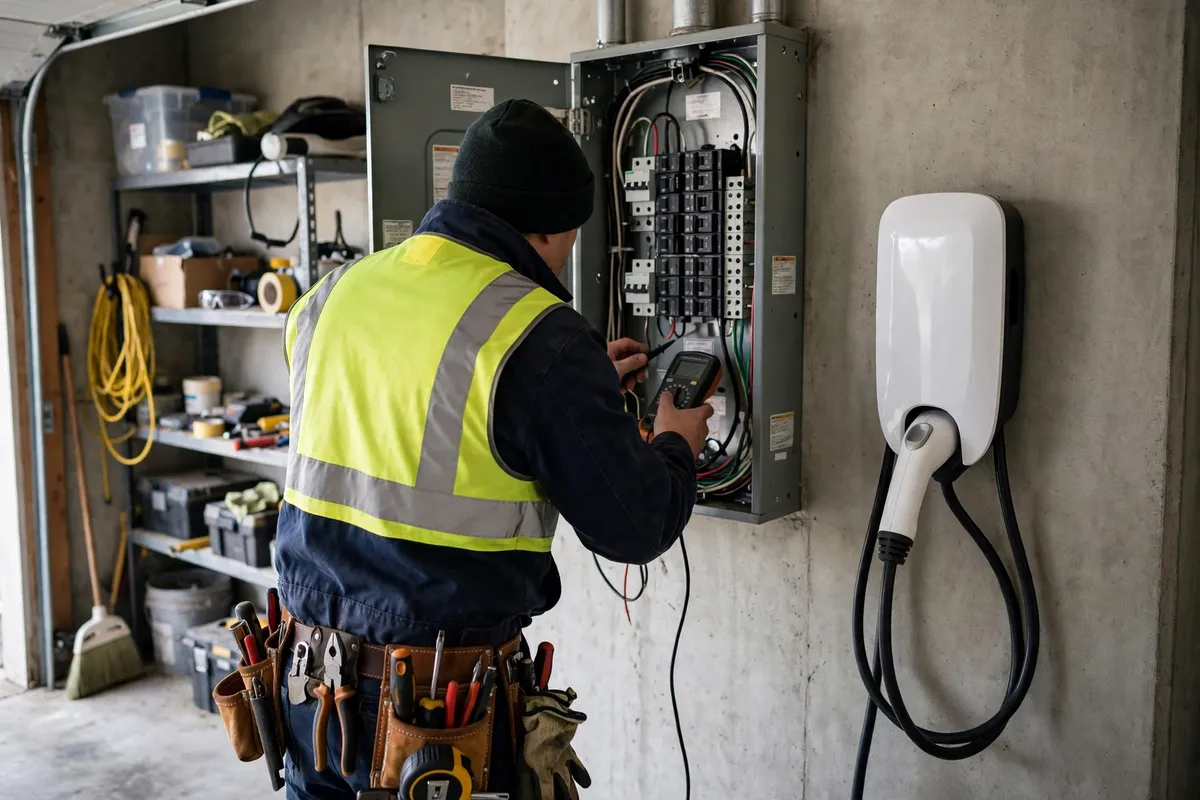
Factor Five: Charger and Connection Choice

The equipment itself is one line among several, but it still matters. A basic, non-networked unit and a feature-rich unit with scheduling, energy reporting, and app control sit at different equipment price points. The connection style matters too: a hardwired installation and a plug-in installation using a new 240-volt outlet involve different materials and labor, a trade-off explored in our comparison of NEMA 14-50 and hardwired chargers and on the NEMA 14-50 outlet installation page. Connector choice plays a role as well, particularly for brand-specific equipment such as the units on our Tesla charger installation page, or for drivers weighing the standards in our NACS vs J1772 guide.
How to Read an Itemized Quote

A useful quote separates the project into line items you can follow. Expect to see the charger equipment (or a note that you are supplying it), the circuit work described by its route and length, the breaker and any panel work itemized separately, the connection hardware, the permit and inspection handling, and any finish or patching work. When each element stands on its own line, you can ask focused questions: why is this here, what changes if we route differently, what does the panel line include?
Questions worth asking any installer include: Did you perform a load calculation, and may I see it? Does this quote include the permit and inspection? What is assumed about the route, and what would change it? If the panel needs work later for a second EV, does this design anticipate that? Clear answers to those questions tell you more about the quote's reliability than the total does.
Why a Blind Phone Quote Misleads
A price given without seeing the home is a guess wearing a number's clothing. The person quoting cannot know your panel's calculated capacity, the distance and route to your parking spot, whether your garage is finished, or which permit desk has jurisdiction. To produce any figure at all, they must assume the simplest version of every factor — and then the real quote, after a site visit, lands higher and feels like a bait and switch even when no one intended it.
The reverse failure exists too: a phone quote padded against every unknown can scare a homeowner whose actual project is simple. Either way, the number was never really about your house. A site assessment converts assumptions into facts, and facts are what a firm quote is built from. That is the process behind our residential EV charger installation referrals.
About the Federal 30C Credit

Homeowners sometimes ask whether a federal tax credit will offset part of the project. Be aware that the federal 30C alternative fuel refueling property credit has ended; it is not available for new home charger installations, and no current quote should be presented as if it were. If any proposal leans on that credit to make its numbers look better, that is a reason to ask hard questions about the rest of the proposal too.
Frequently Asked Questions
Why do two neighbors get different quotes for the same charger?
Because the charger is the only thing the two projects share. Panel capacity, the distance and route between panel and parking spot, finished versus unfinished walls, and permit jurisdiction all belong to the individual house. Neighbors on the same street routinely have different panels from different decades, and those differences are exactly what quotes are made of.
What line items should appear on an itemized installation quote?
Look for the equipment, the circuit work with its route described, breaker and panel work listed separately, connection hardware such as a new outlet where applicable, permit and inspection handling, and any patching or finish work. A single lump figure with no breakdown gives you nothing to verify and nothing to compare against another proposal.
Can I supply my own charger to control the project scope?
Homeowners commonly purchase the charger themselves and have the installation quoted around it. If you go that route, confirm the exact model with the installer beforehand so the circuit, breaker, and connection style are planned around the unit you actually bought, and keep its documentation available for installation day and inspection.
Does a detached garage change an installation quote?
Yes, usually in the routing factor. Power has to travel from the home's panel to a separate structure, which can involve trenching or an overhead run and often a subpanel in the garage. It is routine work, but it is more work than a circuit inside one building, and the quote will reflect that.
Is a site visit really necessary before a firm quote?
For a firm quote, yes. The factors that move the price — panel capacity confirmed by calculation, circuit route, wall construction, jurisdiction — cannot be assessed from a phone description. A professional who insists on seeing the home before committing to a number is protecting you from the mid-project surprise quote, not stalling.
Putting the Factors Together

A charger installation quote is a description of your home translated into work. Read it that way: check that each factor in this guide appears somewhere in the breakdown, ask about anything missing, and be wary of any number produced without a look at your panel and garage. When you are ready for a site-specific assessment, browse our services, see the locations we connect homeowners in, or explore more guides on the blog. Reach out through our contact page and we will connect you with a local professional who quotes from your actual home, not from assumptions.