Installation Day Out West: What to Expect in Goddard

Let us start with the day itself, because Goddard homeowners tend to ask about logistics first — especially those on larger lots. The visit begins with a walk of the property. In a new subdivision home off 183rd Street or near the schools, that walk is short: panel, garage, parking spot, done. On an acreage property, the walk matters more. The electrician is tracing the route a circuit must travel — out of the house panel, possibly underground, to a detached garage or barn — and measuring it honestly, because distance decides wire size and trench length.
Once the route is confirmed, power to the relevant circuits is shut off and the work proceeds in a predictable order. Breaker in, circuit run, charger mounted, connections made. For an attached garage in one of Goddard's newer neighborhoods, the run may be a matter of feet and the visit wraps in a few hours. For a detached building, trenching is the day's main event: a narrow trench, conduit laid, wire pulled. Many acreage owners add a subpanel in the outbuilding while the trench is open, so the work buys capacity for lights, tools, and a compressor alongside the charger — details are in the residential EV charger installation overview.
The visit ends the same way everywhere: the charger is powered, your vehicle is plugged in, charging is verified at the expected rate, and the electrician shows you the breaker and the basics of the unit before leaving. You will also get the inspection plan, since permitted work closes with an inspector's visit.
Goddard's Three Housing Types, Electrically Speaking
The newer subdivisions

Homes built during Goddard's growth years generally carry 200-amp panels and attached two- or three-car garages. Electrically, these are the straightforward installs: capacity is usually available after a standard load calculation, runs are short, and mounting surfaces are easy. If your home is in this group, your main decisions are charger style and placement rather than infrastructure.
Older in-town homes
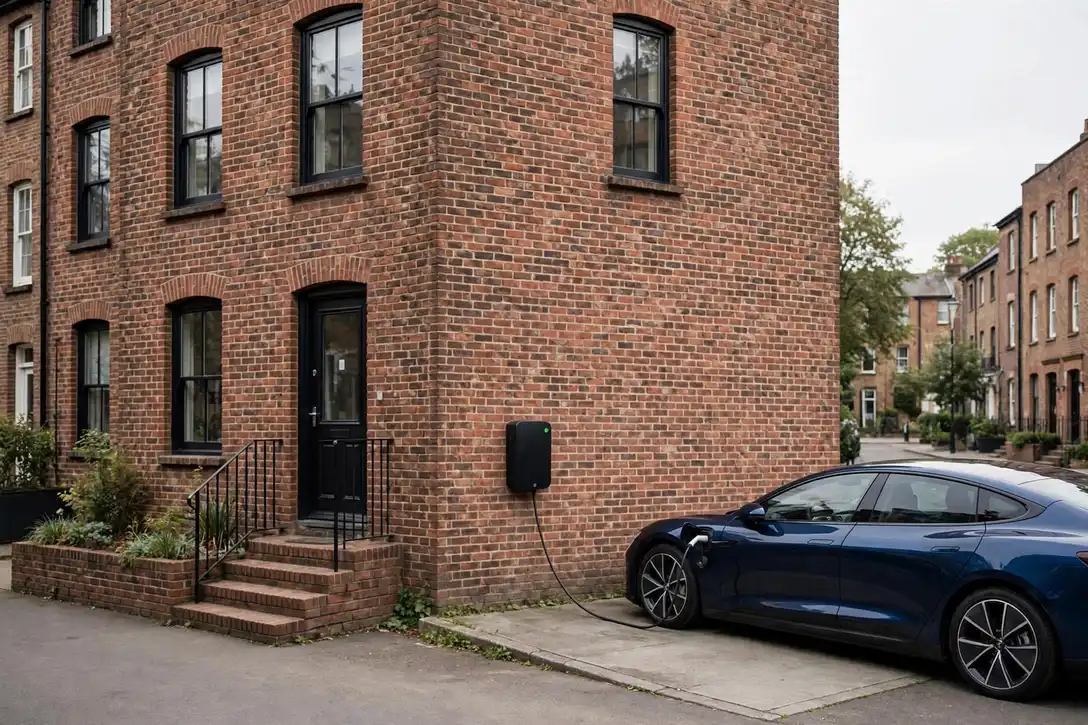
Goddard's original townsite homes were built across many decades, and their electrical systems reflect that — smaller panels, sometimes 100-amp service, and garages that may be single-car, converted, or detached behind the house. None of that prevents home charging. It does mean the conversation starts with the panel: whether a charger circuit fits as-is, whether a panel upgrade for EV charging makes sense, or whether a power-managed charger that adjusts to the house's load is the right tool. Older Goddard homes often combine the charger project with other overdue electrical updates, which can be an efficient way to handle both.
Acreage and edge properties

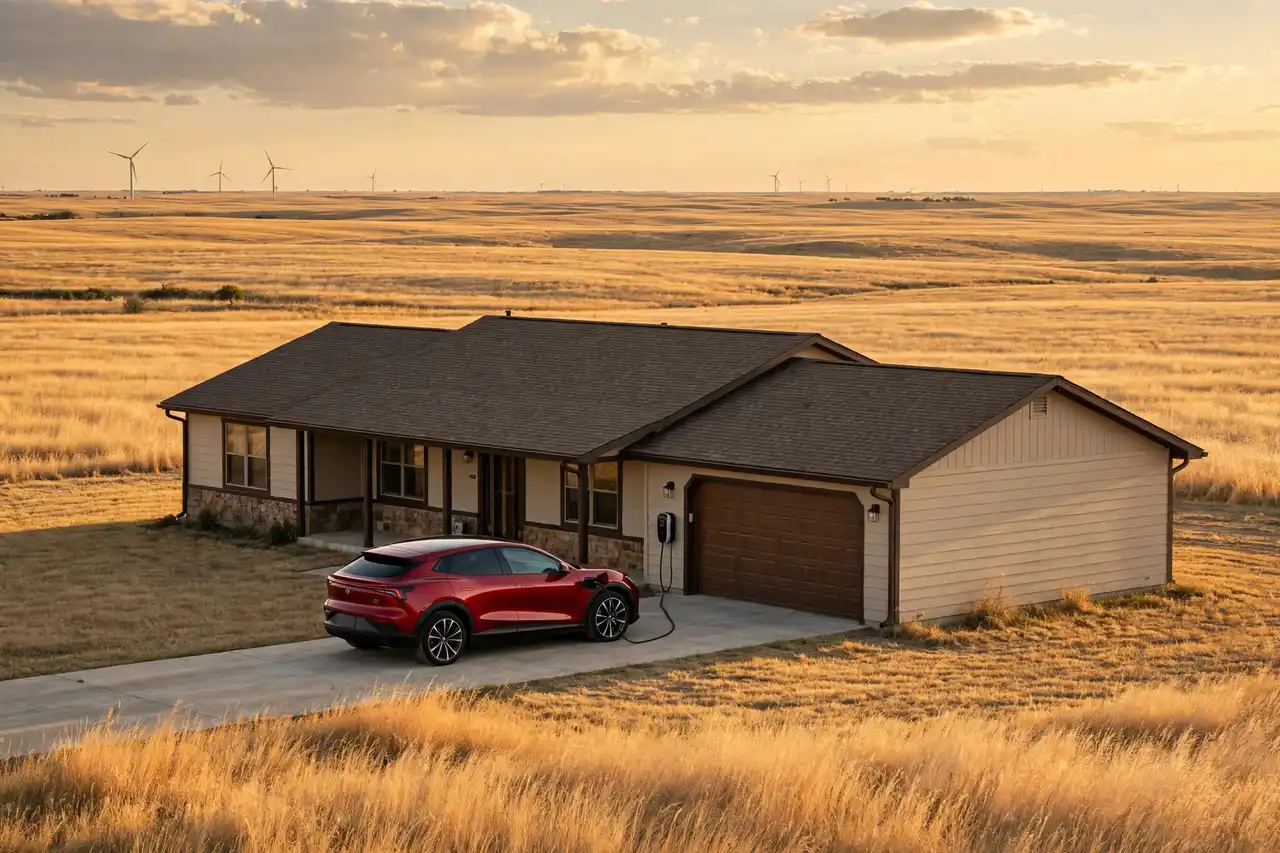
West and south of the subdivisions, lot sizes jump and buildings multiply. The electrical question here is geography: where does the vehicle sleep, and how far is that from the panel? Long driveway and detached-garage runs are the local specialty. They are entirely workable — Kansas electricians run feeders to outbuildings constantly — but they reward planning, because the difference between a 40-foot run and a 120-foot run is real trenching and heavier wire.
Charger Formats for Goddard Lifestyles

The workhorse choice everywhere is Level 2 EV charger installation — a 240-volt circuit that restores a day's driving in a few overnight hours. Within that, Goddard households split by parking reality. Subdivision families parking in an attached garage often choose a hardwired wall connector for its clean look and higher potential amperage. Acreage owners parking in a shop or barn sometimes prefer a NEMA 14-50 outlet installation, because an outlet in a working building earns its keep beyond the car — welders, compressors, and RV hookups all speak that same 240-volt language.
If a charger will live outdoors or in an open-front building, tell the electrician early. Equipment ratings and mounting details differ for exposed locations, and Kansas wind-driven rain is a real design input, not a footnote.
Permits on the West Side of Sedgwick County
Goddard is a Sedgwick County city, and electrical permits for home charger work here are typically through MABCD — the Metropolitan Area Building and Construction Department — which covers permitting and inspections for most of the Wichita metro. Some projects are coordinated with the city's own involvement depending on scope, and your electrician will confirm the correct route for your address when the job is set up.
The practical experience for the homeowner is simple: the electrician files, installs, and schedules the inspection; you keep the signed-off paperwork. That documentation has quiet value in a fast-growing town where homes turn over as families trade up within the Goddard school district. Our Wichita permit guide explains the metro system in fuller detail.
Living Electric in Goddard
Goddard's daily geography is a straight line: US-54/Kellogg runs east into Wichita, roughly a 20-minute drive to the west side and longer to downtown or the east side. Most Goddard EV owners are commuting that corridor daily, which is precisely the use case home charging was made for. Plug in at night, leave full, and the round trip barely dents the battery even in winter, when range shrinks and a garage-kept car that preconditions while plugged in starts the drive warm.
Weekends bend the pattern. Tanganyika Wildlife Park draws Goddard families and their visiting relatives; youth sports and trips to Wichita's west-side shopping add miles in bursts. None of it requires planning when the car refills at home every night. For acreage households, the benefit compounds: every destination is a drive, so starting each morning with a full battery is the difference between an EV that fits the lifestyle and one that fights it.
Should a charger ever trip a breaker repeatedly, show a fault, or stop mid-charge, the EV charger repair page explains how repair referrals are handled.
West-Side Neighbors
We also connect homeowners in Cheney further west and in Maize to the northeast, where new subdivisions are rising in a similar pattern. Browse all the communities we serve on the locations page.
Frequently Asked Questions
Our Goddard property has a detached garage about 100 feet from the house — is that too far for a charger?
No — distance adds scope, not impossibility. A run of that length typically means trenching conduit between the buildings and using larger wire to keep voltage drop in check, and many owners add a subpanel in the detached garage so the building gains general capacity along with the charger circuit. The electrician will measure the actual route and give you a clear picture of the work before anything is scheduled. Detached runs are among the most common job types on Goddard's acreage edges.
We live in an older home in town in Goddard — should we expect a panel upgrade?
Possibly, but it is not a foregone conclusion. Older in-town Goddard homes often have 100-amp service, and whether a charger fits depends on the total load the house already carries. After a load calculation, the options might be a standard circuit, a charger set to a lower amperage, a load-management device, or a panel upgrade — sometimes combined with other electrical work the home needs anyway. The honest answer comes from looking at your specific panel, which is exactly what the initial assessment is for.
How long does a subdivision install in Goddard usually take on the day?
For a newer Goddard home with the panel in or near the garage, the installation visit is typically a few hours: breaker and circuit, charger mounted, tested with your vehicle plugged in. The main variables are the distance between panel and charger and whether the run passes through finished spaces. The separate inspection visit afterward is shorter. When you first reach out, describing your garage and panel location helps the electrician estimate the visit accurately.
Does Goddard use MABCD for electrical permits, or the city?
For most residential charger work in Goddard, permits are typically through MABCD, the metro-area department that handles Sedgwick County communities, with the inspection following the same system. Certain scopes can involve the city's own processes, and the electrician who takes your job will verify the filing route for your address rather than assuming. Either way, the permit and inspection are arranged for you — homeowners are not expected to file electrical permits themselves.
Can a charger in Goddard handle outdoor or open-barn mounting?
Yes, with the right equipment selection. Chargers carry ratings for indoor and outdoor use, and an exposed or open-front location calls for a unit rated for weather, mounted so connections stay protected from wind-driven rain — a genuine Kansas consideration. Tell the electrician exactly where the vehicle parks and what shelter exists there, so the mounting plan matches the building's exposure.
Bring Home Charging to Your Goddard Address
Subdivision garage, in-town original, or acreage outbuilding — Goddard homes of every era are charging EVs tonight. The right design starts with your panel and parking reality. Share the details through the contact page and Wichita EV Charger will connect you with an independent local electrician who works in Goddard.