How EV Charging Loads Your Panel
A Level 2 home charger typically runs on a 240-volt circuit with a 40-amp, 50-amp, or 60-amp breaker, delivering about 7.7 kW to 11.5 kW depending on the charger and circuit size. That is a significant, sustained load — like an electric range running for hours, not a quick burst from a microwave.
Unlike loads that cycle on and off, EV charging is treated as a continuous load under the National Electrical Code. The circuit, breaker, and wiring must be sized for sustained use, and the panel must carry the charger alongside everything else running at once — air conditioning, a water heater, and cooking. That is why charger planning connects back to residential EV charger installation and to whether a NEMA 14-50 outlet installation or a hardwired unit fits your setup.
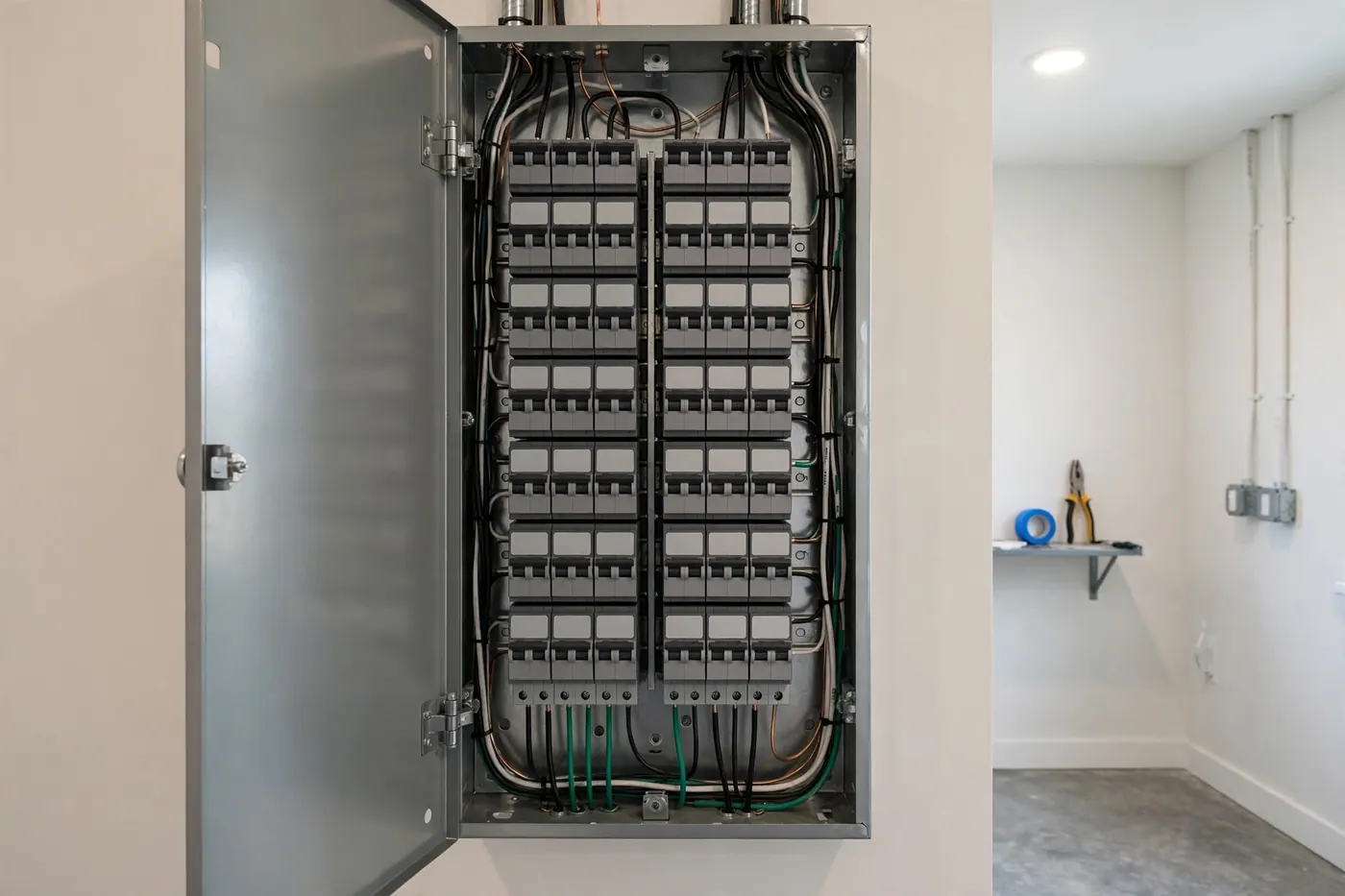
A Panel That Looks Fine but Has No Room Left

The most common problem is not a panel that is visibly damaged. It is a panel that works fine for daily life but has no capacity left to give.
Signs Your Panel May Be Full or Undersized

Several clues suggest a closer look is needed before adding an EV charger:
- No open breaker spaces. Every slot is occupied, sometimes with tandem breakers already doubled up.
- Frequent breaker trips. Trips when the dryer, oven, and air conditioner overlap signal a service already working hard.
- 100-amp service in a larger or all-electric home. Adequate for a smaller home with gas appliances, but it fills up quickly with electric heat, range, dryer, and water heater.
- Flickering lights or a warm panel cover. Lights dimming when a large appliance starts, or a warm panel, should be evaluated.
- Recent additions. A hot tub, workshop, finished basement, or home addition may have used the spare capacity a previous owner left.
- An older panel with limited space. Many postwar homes in Wichita's core and in Haysville were built with smaller panels matched to far fewer large appliances than homes run today.
None of these signs automatically means you need a full upgrade. They mean you need a load calculation before anyone promises a charger circuit.
Older Panels in Wichita-Area Homes

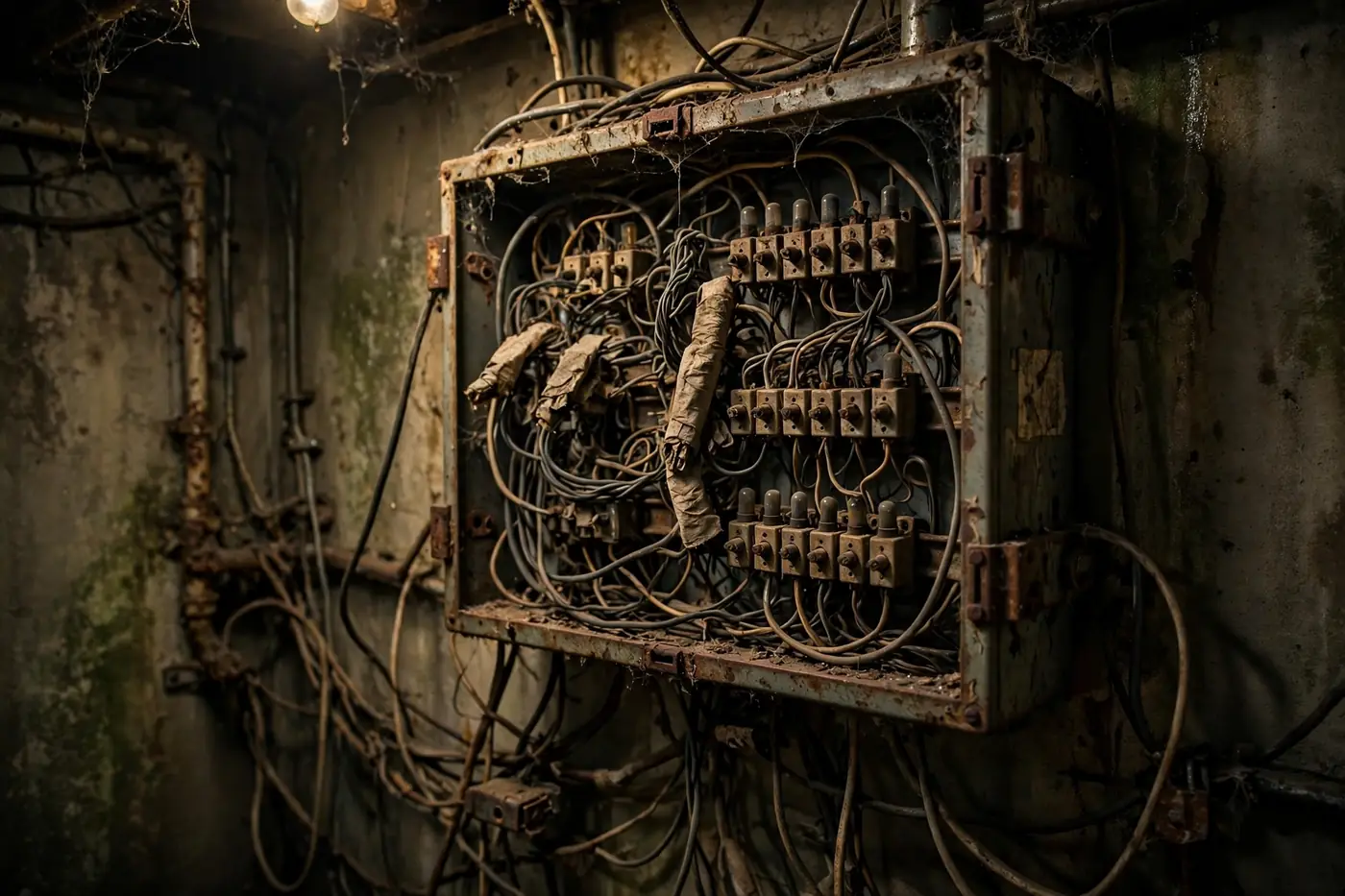
Wichita's housing stock includes many homes built in the 1950s through the 1970s, particularly in the city's core and in Haysville, often with 60-amp or 100-amp service and panels now in service for decades.
Some homes from that era still have Federal Pacific or Zinsco-era panels. These are aging pieces of equipment, and many electricians recommend replacing them when other major electrical work is planned, because replacement parts can be difficult to source and the equipment is well beyond the age of a typical modern panel. Only an electrician who inspects your panel in person can assess its condition. When a panel is old, full, and due for attention anyway, combining its replacement with EV charger preparation is often more efficient than doing the two jobs years apart. If your home has aluminum branch wiring, a fuse box, or visible corrosion in the panel, mention that when you call.
100-Amp vs. 200-Amp Service: What the Numbers Mean

Your service size is the total power your home can draw from the utility at one time, in amps. The two most common residential sizes in the Wichita area are 100 amps and 200 amps.
A 100-amp service at 240 volts provides up to 24 kW of total capacity on paper, but homes are not expected to run at their full rating continuously. After continuous-load rules and the appliance mix of a modern home, practical headroom on 100 amps can be modest — especially in an all-electric home.
A 200-amp service doubles that to up to 48 kW on paper, with much more practical headroom. It is the standard size for most new Wichita-area homes today, and it comfortably supports a Level 2 charger alongside air conditioning, electric cooking, laundry, and future additions like a second EV.
Upgrading from 100 to 200 amps usually involves replacing the main panel, the meter base or service equipment as needed, and the service entrance conductors, plus coordinating the utility side with Evergy. The meter and the service drop — the lines from the utility to your home — are on the utility's side. Your electrician handles the home's side and coordinates timing so power can be disconnected and reconnected safely on upgrade day, which is why upgrades are scheduled rather than done same-day.
Not every home needs 200 amps. A smaller home with gas heat, range, and water heater may pass a load calculation at 100 amps with room for a charger, particularly with a lower charger setting or load management. The calculation — not panel size alone — decides.
What an NEC Load Calculation Is, in Plain Language

A load calculation is the National Electrical Code (Article 220) method electricians use to estimate a home's total electrical demand. It is not a guess, and it is not adding up every breaker in the panel — breaker labels almost always total far more than the service size, because not everything runs at once.
Instead, the calculation works through categories:
- General lighting and receptacle load, based on square footage.
- Small-appliance and laundry circuits, at standard values.
- Fixed appliances such as a water heater, dishwasher, and microwave.
- Large loads such as a range, dryer, and heating and cooling equipment, with demand factors applied because they do not all run at full draw at once.
- The proposed new load — the EV charger at its planned circuit size, counted as a continuous load.
The result is compared against your service size. If it fits with the charger added, the panel can support the installation. If not, the electrician discusses alternatives: a lower charger setting, load management, or a service upgrade.
The permit process expects this calculation. Electrical permits for panel work and new circuits in the Wichita area run through MABCD — the Metropolitan Area Building and Construction Department — and the calculation demonstrates the new work is sized correctly. See the EV charger permit guide for Wichita and the panel capacity guide for more.
Matching the Fix to What Your Home Actually Needs
There is no single fix for a tight panel. A good electrician works from least involved to most involved, and recommends the first option that safely meets your charging goals.
Option 1: Add the Charger on Your Existing Panel

If the calculation passes and there is space for a new two-pole breaker, the simplest path is to add the charger circuit directly. This is common with 200-amp service and in smaller 100-amp homes with gas appliances. The electrician may suggest a 40-amp or 50-amp circuit rather than the maximum 60-amp circuit if that keeps the calculation comfortable while still covering typical daily driving overnight.
Option 2: Load Management and Smart Splitters
Load management equipment watches total electrical use and pauses or reduces EV charging as the home approaches its service limit, then resumes when other loads drop off. A common example shares an existing 240-volt circuit — such as a dryer circuit — between the dryer and the charger, allowing only one to run at a time. These are often called smart splitters.
For the right home, load management can avoid an upgrade entirely — particularly when the calculation misses by a small margin, the panel is in good condition but nearly full, or a homeowner wants charging now without a major electrical investment. The trade-off is speed: while the system manages load, the car may charge more slowly or pause. For overnight charging, most drivers never notice. Your electrician can explain whether a listed system fits your panel and how it is documented for permit and inspection; see also the panel capacity guide.
Option 3: Add a Subpanel
Sometimes the service has enough total capacity, but the main panel has no physical breaker spaces left. A subpanel — a smaller secondary panel fed from the main panel — adds breaker spaces in the garage or near the main panel. It does not increase total service capacity; it only adds room for circuits, so it is the right fix when space is the problem, not total power. A garage subpanel can also shorten the charger wiring run and leave room for a future second charger circuit.
Option 4: Upgrade the Panel and Service

When the calculation shows the service itself is undersized, or the panel is aged and due for replacement, an upgrade is the durable solution. The typical upgrade replaces a 100-amp panel with a 200-amp panel, updates the service entrance equipment, adds modern breaker protection where code requires it, and leaves ample space for the charger circuit and future needs — a second EV, a hot tub, or a home addition all become easier with capacity in reserve. Homeowners planning a Tesla charger installation or a high-amperage hardwired charger often choose this path so the charger can run at its full rate without load management trade-offs.
What Panel Upgrade Day Involves
- Permit first. The electrician obtains the electrical permit through MABCD before work begins.
- Utility coordination. The disconnect and reconnect with Evergy is scheduled. Power will be off for part of the day — commonly several hours — so plan for refrigeration, medical equipment, remote work, and pets.
- Old equipment removal. The existing panel and service equipment are removed, and wiring is inspected as it is transferred.
- New equipment installation. The new panel, breakers, service conductors, grounding, and bonding are installed. Grounding updates are normal, because modern grounding requirements are stricter than when many older homes were built.
- EV charger circuit. If the charger circuit is part of the same project, it is typically completed in the same visit window, with the charger mounted and connected.
- Inspection. An MABCD inspector reviews the work, and the utility connection is finalized as the process requires.
- Labeling and walkthrough. Circuits are labeled, and the electrician walks you through the new layout and the charger breaker location.
Most single-panel upgrades are completed in one working day, though inspection and utility scheduling can extend the overall timeline. Your electrician will explain the expected schedule before work starts. Broader project cost factors are discussed in the EV charger installation cost factors guide.
Pairing a Panel Upgrade With Your Charger Choice
An upgrade is a good moment to think ahead. If your household expects a second EV within a few years, tell your electrician now — reserving breaker space and planning conduit paths during the upgrade is far easier than reopening finished work later. A hardwired charger on a 60-amp circuit delivers the fastest common home charging, while a plug-in charger on a 50-amp NEMA 14-50 circuit offers flexibility to replace the unit later. If your current charger has failed and the panel is also due for work, combining EV charger replacement with panel work in one project can reduce repeat visits.
How This Site Helps
This site is a referral service, not a direct service company. It connects you with an independent local electrician serving the Wichita area who can assess your panel, perform the load calculation, explain your options, and handle the permit and inspection process through MABCD. You discuss scope, scheduling, and pricing directly with the electrician. To start, visit the contact page or review services and locations.
Frequently Asked Questions
How do I know if my panel can handle an EV charger?
The reliable way is an NEC load calculation by an electrician, comparing your home's total calculated demand — including the proposed charger — against your service size. Clues that a calculation is especially important include 100-amp or smaller service, no open breaker spaces, frequent trips, an all-electric home, or an older panel. Some homes pass as-is; others need load management or an upgrade.
What is a load calculation and why does it matter?
It is the National Electrical Code method for estimating a home's electrical demand, accounting for square footage, appliance circuits, heating and cooling, large appliances, and any new load such as an EV charger, with demand factors applied because not everything runs at full draw at once. It determines whether a charger can be added safely within your existing service and supports the permit application filed through MABCD.
Can load management help me avoid a panel upgrade?
In many cases, yes. Load management equipment monitors total electrical use and automatically pauses or reduces EV charging when other large loads run, keeping the total within your service limit. Smart splitters that share a dryer circuit with a charger are another form of the same idea. It works best when your calculation misses by a modest margin and your panel is otherwise in good condition. The trade-off is that charging may pause or slow at times.
How long does a panel upgrade take?
The hands-on work is usually completed in one working day, with power off for several hours during the changeover. The overall project spans longer because the permit is obtained through MABCD in advance, the Evergy disconnect and reconnect must be scheduled, and an inspection follows.
Does a panel upgrade need a permit in Wichita?
Yes. Panel upgrades and new EV charger circuits in the Wichita area require an electrical permit, and the work is inspected. Permits are handled through MABCD, the Metropolitan Area Building and Construction Department, which serves Wichita and surrounding Sedgwick County communities. Your electrician typically files the permit as part of the project. See the EV charger permit guide for Wichita.
Ready to Find Out What Your Panel Can Handle?
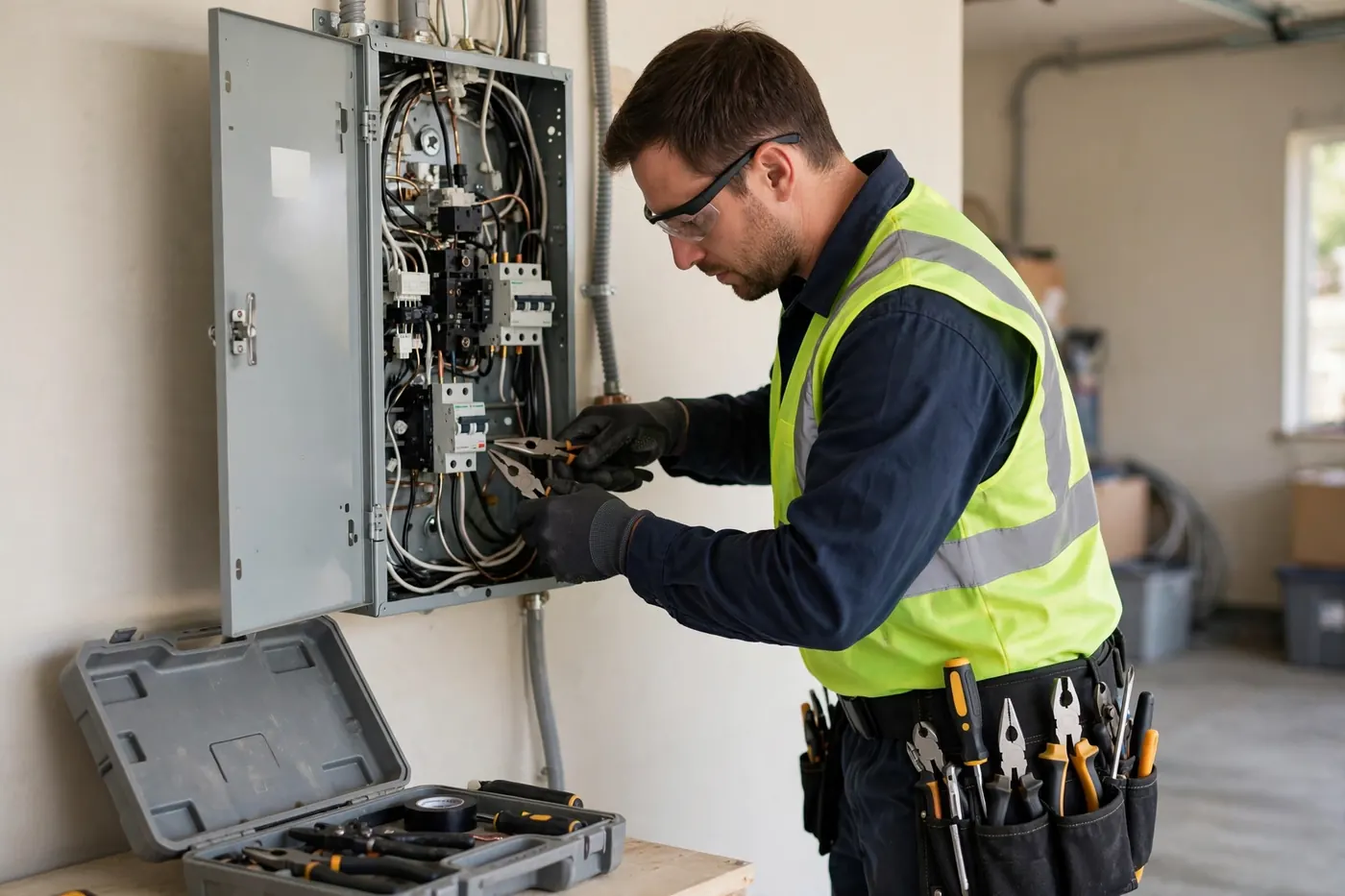
You do not need to guess about your panel or buy a charger first and hope the electrical side works out. Start with an assessment: an independent local electrician connected through this site can run the load calculation, inspect your panel, and explain whether your home is ready as-is, can use load management, or would benefit from an upgrade. Reach out through the contact page to get connected.