The Haysville Panel Story: 100 Amps and Earlier

To understand a Haysville install, start with what changed in American home wiring. A ranch home built in 1962 was wired for a refrigerator, a furnace, lights, and maybe a window air conditioner. Service sizes of 60 or 100 amps were normal, and some homes from the earliest postwar years still carry fuse-era equipment or early breaker panels that have long since filled every slot. Central air, electric dryers, modern kitchens, and water heaters were added over the decades, each one claiming capacity.
A Level 2 EV charger asks for a dedicated 240-volt circuit — commonly 40 to 60 amps of breaker capacity. On a 200-amp panel, that is a routine addition. On a full 100-amp panel in a Haysville ranch, it is a genuine engineering question, and any electrician who skips the load calculation is skipping the most important step of your job.
The good news: there are more answers than most homeowners expect. A load calculation sometimes shows the circuit fits as-is. A charger can be configured to a lower amperage that still restores a day's driving overnight. Load-management devices can pause charging when the house is peaking — the minutes when dryer, oven, and air conditioner coincide — and resume when the house quiets down. And when the panel truly is at the end of its road, a panel upgrade for your EV charger replaces the bottleneck entirely, benefiting the whole house, not just the car.
The tornado-rebuilt pockets
Neighborhoods rebuilt after the 1999 tornado are Haysville's exception to the old-panel rule. Homes constructed in the early 2000s on those streets carry modern 200-amp service, so their installs look like any newer suburb's: short runs, open breaker spaces, done in a visit. If you are not sure which category your home falls into, the panel itself will say — its main breaker rating and the fullness of its slots tell the story at a glance.
What Installation Looks Like in an Older Haysville Home

The sequence differs a little from a new-build suburb. The electrician's first job is detective work: opening the panel, identifying what each circuit feeds, checking the service size, and looking at how previous decades of additions were handled. In a Haysville ranch, panels live in varied places — garages, utility rooms, laundry areas, occasionally a bedroom closet from an earlier era — and the route to the garage follows from that location.
If a panel upgrade is part of the plan, it becomes the first phase: new panel, circuits transferred and labeled, service capacity increased, then the charger circuit added to a panel with room to breathe. If the existing panel can carry the charger, the work narrows to the new circuit itself — run through an attic, crawl space, or along a wall depending on the ranch's construction — and mounting the outlet or wall connector in the garage or carport.
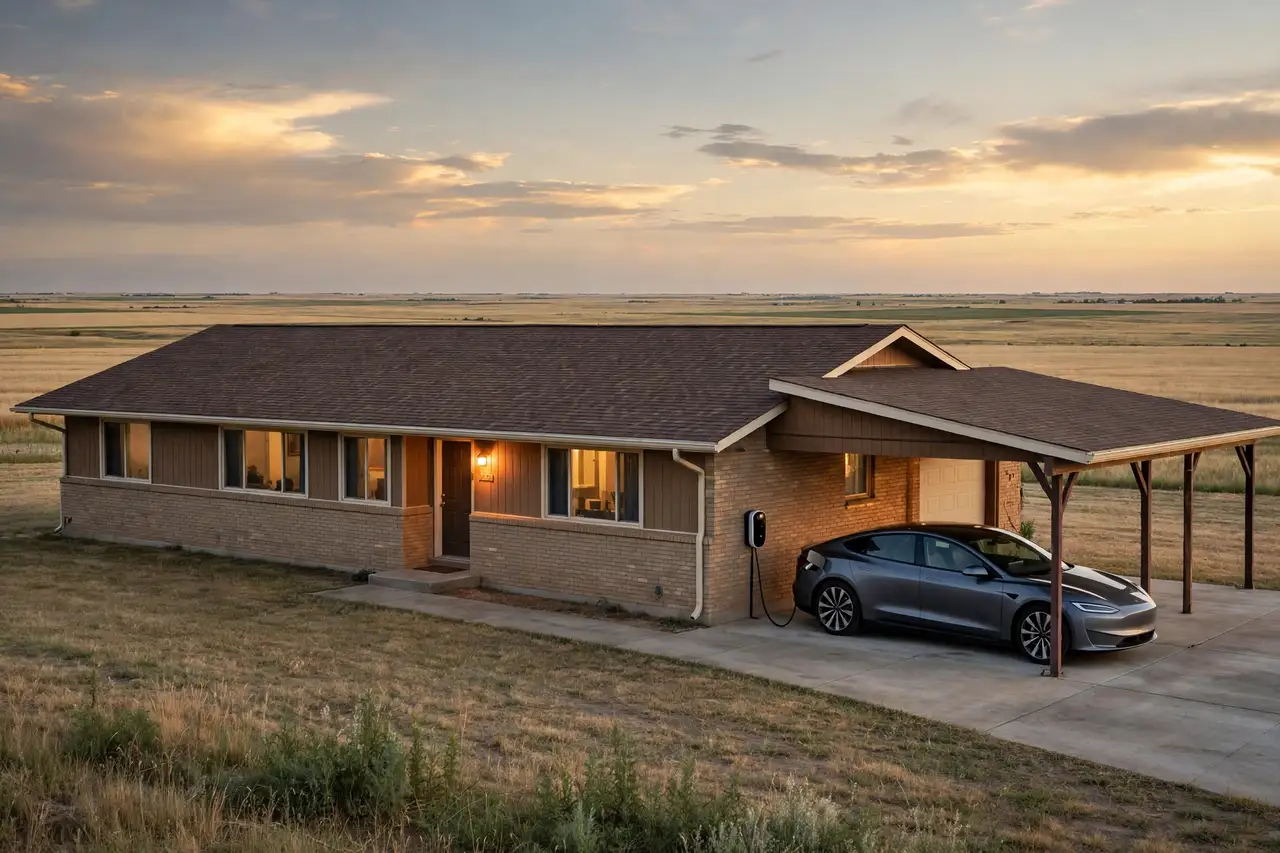
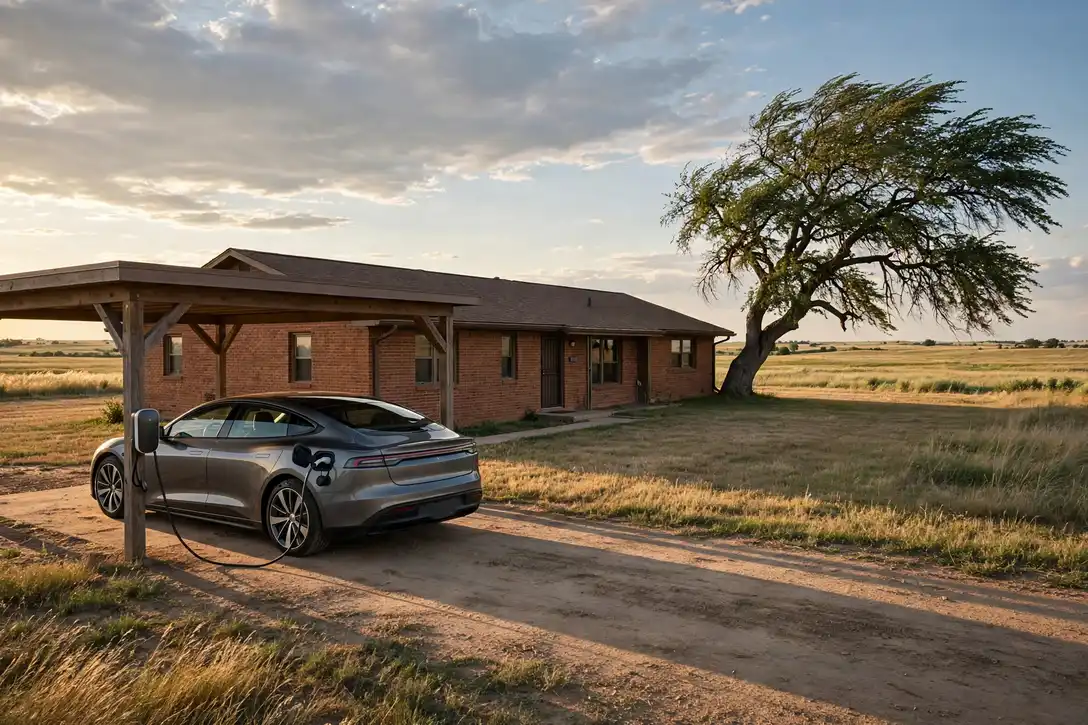
Yes, carport: some Haysville homes park under one, and chargers can be mounted for carport and outdoor parking with weather-rated equipment and the right placement. Tell the electrician where the car actually sleeps. The right charger location is the one matched to your real parking habit, not an idealized garage from the listing photos.
At the end of the visit, the charger is tested with your vehicle connected, the charging rate is confirmed, and you are shown the breaker and controls. If an upgrade was involved, you will also get a newly labeled panel.
Choosing Equipment That Suits an Older Home
Haysville homeowners often do well with flexibility. A NEMA 14-50 outlet installation paired with a plug-in charger lets the charger's amperage be selected to suit the panel — many plug-in units can be set or supplied at different ratings — and the outlet remains useful if the household's vehicles change. A hardwired wall connector can also be configured to a reduced amperage during commissioning, which is a legitimate, code-recognized way to match a charger to a smaller service.
The governing idea is matching: circuit, charger setting, and panel capacity in agreement. A 30- or 40-amp circuit that charges all night will refill the typical Haysville commute — north into Wichita on Broadway or I-35, roughly 25 to 35 miles round trip — with hours to spare. The Level 2 EV charger installation page explains the amperage ladder in plain language. Drivers whose chargers are already installed but acting up — tripping, faulting, charging slowly — can look at the EV charger repair page for how troubleshooting referrals work.
Permits in Haysville

Haysville sits in Sedgwick County, and electrical permits for charger installations here are typically through MABCD — the Metropolitan Area Building and Construction Department — the metro body that handles permitting and inspections for Wichita and its surrounding communities. Panel upgrades are permitted work as well, and both pieces can generally be covered within the project's filing, which your electrician arranges for you.
For older homes, the inspection carries extra weight, and that is a positive. An inspector's sign-off on a new panel or circuit documents that the work meets the current adopted code — valuable in a housing stock where buyers and insurers have legitimate questions about what was done and when. Keep the paperwork with your home records.
Our Wichita EV charger permit guide describes the metro sequence in more detail.
Daily Life on Haysville Time

Haysville families run on school schedules — Haysville schools are the town's backbone — and on commutes up into Wichita for work, the airport area, and shopping. An EV charged at home fits that rhythm without friction: the car leaves full, handles the school run and the commute, and refills overnight. In a town where households keep vehicles a long time and value practicality, home charging's appeal is simple arithmetic — the fueling happens while you sleep.
South-Metro Neighbors
Haysville's closest referral neighbors are Derby to the southeast, with its base-adjacent ranch streets, and Clearwater to the southwest. See every community we connect on the locations page.
Frequently Asked Questions
Our Haysville ranch still has a fuse-era panel — can we charge an EV at all?
Charging is almost certainly in your future, but the panel comes first. Fuse-era and very early breaker equipment was not designed for modern loads, and adding a high-draw continuous load like an EV charger to it is not the right move. The standard path is a panel upgrade to modern 200-amp service, after which the charger circuit is a routine addition. Many Haysville owners find the upgrade overdue for other reasons — insurance questions, renovation plans, a panel with no room for anything new.
What is a load-management device, and why do Haysville homes use them?
It is a device that watches the home's total electrical draw and adjusts the charger in response — pausing or reducing charging when the house approaches its service limit, then restoring full charging when demand falls. In Haysville's 100-amp ranch homes, it can be the difference between needing a service upgrade and not needing one, because the house rarely draws its peak load at 2 a.m. when the car charges.
Our Haysville home was rebuilt after the 1999 tornado — is our install simpler?
In most cases, yes. Homes rebuilt in the early 2000s were wired to the standards of that era, which generally means 200-amp service, modern panels with open spaces, and straightforward garage runs. Your install will likely resemble a new-subdivision job: a load calculation to confirm, a dedicated circuit, the charger mounted, and a test charge — typically a single visit plus the inspection. Mention the rebuild when you reach out.
We park in a carport, not a garage, in Haysville — where does the charger go?
On a post, a wall, or the side of the house near the carport, using equipment rated for outdoor exposure. The real considerations are cable reach to the charge port, protection from weather, and a mounting position that keeps the cable from becoming a trip hazard across a walkway. Carports are common in Haysville's postwar neighborhoods, and electricians here mount chargers for them regularly. Describe your parking setup when you make contact so the mounting plan is part of the design.
If we upgrade our Haysville panel for a charger, what else improves?
Usually, the whole house's electrical headroom. A modern 200-amp panel gives you labeled circuits, space for future additions like a hot tub or workshop equipment, up-to-date breaker protection, and a cleaner answer for insurers and future buyers. Haysville owners often bundle long-postponed items into the same project — outdoor outlets, a dedicated line for a sump pump. Listing your electrical wishes before the assessment visit helps the new panel be planned around all of them.
Start With an Honest Look at Your Haysville Panel

In Haysville, good EV charging starts with the truth about an older panel — and the truth is usually workable. Send your home's details through the contact page and Wichita EV Charger will connect you with an independent local electrician who knows these postwar streets and can lay out your options.