Newer Homes, Modern Panels: The Maize Starting Point
The headline in Maize is how uncomplicated most homes are electrically. A house built in the last decade or so usually has 200-amp service, a panel with available breaker space, and a garage wired with modern methods. For those homes, an EV charger install is a dedicated 240-volt circuit, a wall connector or outlet, and a test charge — no panel surgery, no surprises in the walls.
"EV-ready" deserves a quick clarification, because the phrase gets used loosely in new subdivisions. Some Maize builders included a dedicated circuit or a capped outlet box in the garage. Others simply installed a large panel and left the garage circuit for later. They are not the same job: a home with an existing 240-volt garage circuit may only need the charger mounted and connected, while a home with capacity but no circuit needs the full run. When you reach out, a photo of your panel and any labeled breakers tells an electrician a great deal.
Homes on Maize's rural edges add one variable: distance. A farmhouse-style property or a home with a detached shop may need a longer feed, and outbuildings sometimes warrant their own subpanel. That work is routine, but it benefits from being planned rather than discovered mid-job.
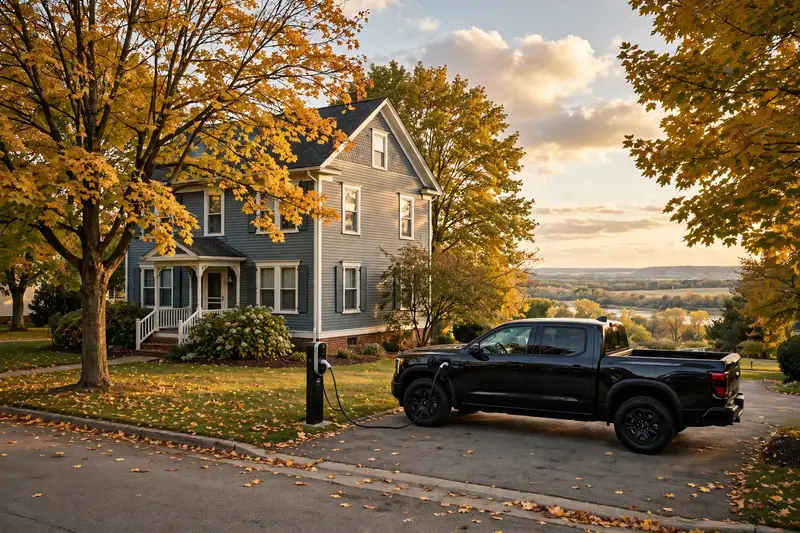
Picking a Charger Setup for a Maize Household

Most Maize families are choosing for a commute: northwest Wichita into downtown or the west-side employers is a moderate daily drive, and school activities add short trips in every direction. Overnight Level 2 EV charger installation covers that pattern with a wide margin, restoring the day's miles in a few hours while the car sits in the garage.
The hardware decision usually comes down to two formats. A hardwired wall connector suits households that park the same EV in the same bay every night — it is tidy, sealed where needed, and can run at higher amperage when the circuit allows. A NEMA 14-50 outlet with a plug-in charger suits households that want flexibility: the charger can be unplugged and taken along on a move, and the outlet can serve other 240-volt equipment in a pinch.
Tesla owners in Maize often ask specifically about the Wall Connector, and the Tesla charger installation page covers that equipment in detail. Whatever the brand, the circuit underneath is designed the same way — sized to the charger's draw, protected by the correct breaker, and installed to code.
A note for Maize households planning a second EV

It is common in Maize's newer neighborhoods for one EV to become two within a couple of years. If that is even a possibility, say so at the start. The electrician can size the plan accordingly — two circuits where capacity allows, a power-sharing pair on one circuit, or conduit placed now so the second install later is a short visit.
Permits for Maize Homes

Maize is a Sedgwick County community, and electrical permits for charger installations here are typically through MABCD — the Metropolitan Area Building and Construction Department — which administers permitting and inspections across most of the Wichita metro. Your electrician confirms the filing route for your specific address and handles the paperwork as part of the job.
The inspection that follows verifies the new circuit independently: breaker size against wire size, proper grounding, correct connections at the charger. For a community full of recently built homes that will change hands over the coming decades, that documented circuit becomes part of the home's paper trail. Our EV charger permit guide for Wichita lays out the metro process step by step.
Installation Day in Maize: Step by Step
Here is the shape of a typical Maize install. The electrician arrives and walks the garage with you, confirming where the vehicle parks and where the charge port sits when parked. Small detail, big consequence: cable reach is checked against your actual car, not a guess.
Next, power to the work area is shut off and the panel is opened. In a newer Maize home, the new breaker typically slots into an open space, and the circuit run — often through the garage wall cavity or across the ceiling from a panel in the garage or laundry room — is completed and secured. The wall connector or outlet is mounted, wired, and leveled, because a crooked charger annoys its owner every single day.
Finally, the circuit is energized and tested. The electrician plugs in your vehicle, confirms the charging rate matches the circuit's design, and shows you the charger's indicators and its breaker. The whole visit for a straightforward newer home is usually measured in hours. You will also hear how the inspection scheduling works, so you know whether you need to be home for it. One tip for new subdivisions: if you know where studs and blocking are from a recent build, mention it — it speeds up mounting.
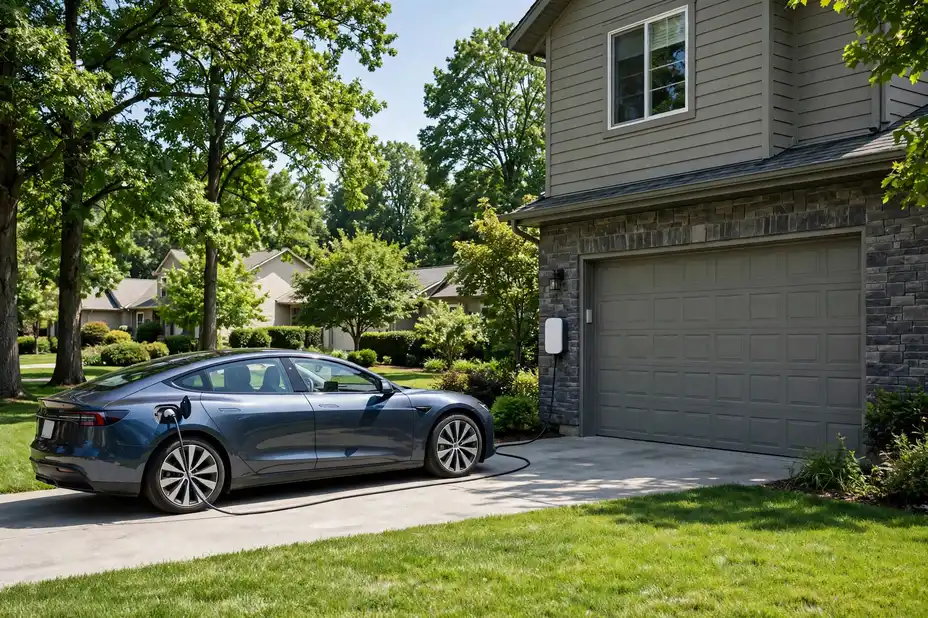
Charging Through a Maize School Year

Life in Maize runs on the school calendar, and EV routines settle into it quickly. Morning departures for Maize schools, evening practices, weekend tournaments in Wichita or Hutchinson — the car leaves and returns in a rhythm, and overnight charging matches that rhythm exactly. Parents often say the biggest change is what disappears: no fuel stop inserted into an already full weekday, no range arithmetic before a Saturday of errands.
Rural-edge households notice a different benefit. When the nearest public charger is a drive in itself, home charging is the whole ballgame — the vehicle must be ready each morning, and a Level 2 circuit in the garage or shop delivers that without planning around anyone else's availability. Cold-weather preconditioning while plugged in is a quiet bonus on January mornings heading down Maize Road. If your household's pattern changes — a teen driver, a second EV — the setup can usually grow with you, as the residential EV charger installation overview explains.
Maize and Its Neighbors
Goddard lies to the southwest along the Kellogg corridor, and Valley Center sits to the northeast — both share Maize's blend of subdivisions and acreage. See all the communities we serve on the locations page.
Frequently Asked Questions
Our Maize home was advertised as EV-ready — what does that actually mean for the install?
It depends on what the builder installed, and there are two common versions. Some Maize homes have a dedicated 240-volt circuit already run to the garage, sometimes ending in an outlet or a capped box; in that case, the job may be as simple as mounting and connecting your charger and verifying the circuit is sized correctly. Others were built with panel capacity reserved but no garage circuit, so the run still needs installing. A photo of your panel and garage outlet will tell the electrician which version you have.
Do Maize's newer subdivisions need panel upgrades for a charger?
Rarely. Homes built in the 2010s and later along Maize Road and the 37th and 45th Street corridors typically have 200-amp panels with room to spare, so a charger circuit is usually a straightforward addition after a load calculation confirms it. The exceptions tend to be homes that added major loads since construction — a hot tub, a pool, shop equipment — and even then, power-managed charging often avoids an upgrade.
We live on acreage at Maize's edge — is home charging still practical?
It is arguably more valuable there, because public charging options are a real drive away. Acreage installs sometimes involve a detached shop or barn, which can mean a longer feeder run or a subpanel, but the result is the same: the vehicle charges where it parks, every night. Mention the distances involved when you first make contact, and the electrician can plan the route in advance.
How does the school-year routine in Maize affect what charger we should choose?
For most Maize families, the pattern is a moderate Wichita commute plus a halo of short school and activity trips, which any properly sized Level 2 setup restores overnight. Where the routine matters is in the details: if two vehicles share one charger on alternating nights, or a vehicle returns late and leaves early, a higher-amperage circuit or two-connector plan may fit better. Describe your household's actual week to the electrician — the right design follows from the schedule.
Who handles the MABCD permit for a Maize installation?
The electrician does. For Maize addresses, permits are typically through MABCD, and pulling the permit and coordinating the inspection are part of the installation service rather than homework for the homeowner. You will be told when the inspection is scheduled and whether garage access is needed. Once it passes, keep the documentation with your home records.
Talk to Someone About Your Maize Garage
New subdivision or rural edge, one EV or two — the right Maize setup starts with your panel, your parking, and your daily miles. Send a few details through the contact page and Wichita EV Charger will connect you with an independent local electrician who installs in Maize.