Who Installs Commercial Charging in Wichita

Commercial charging serves different purposes depending on the property, and the design follows the purpose.
Workplace Charging

Employers downtown, in the WaterWalk district, and in office parks along east Kellogg install charging primarily for employees. Workplace charging is typically Level 2, because cars sit parked for a full shift — rapid charging is unnecessary when a vehicle dwells for eight hours. The planning questions are how many employees drive EVs today, how fast that number is growing, and whether charging will be open, assigned, or managed through an access system.
Retail and Hospitality

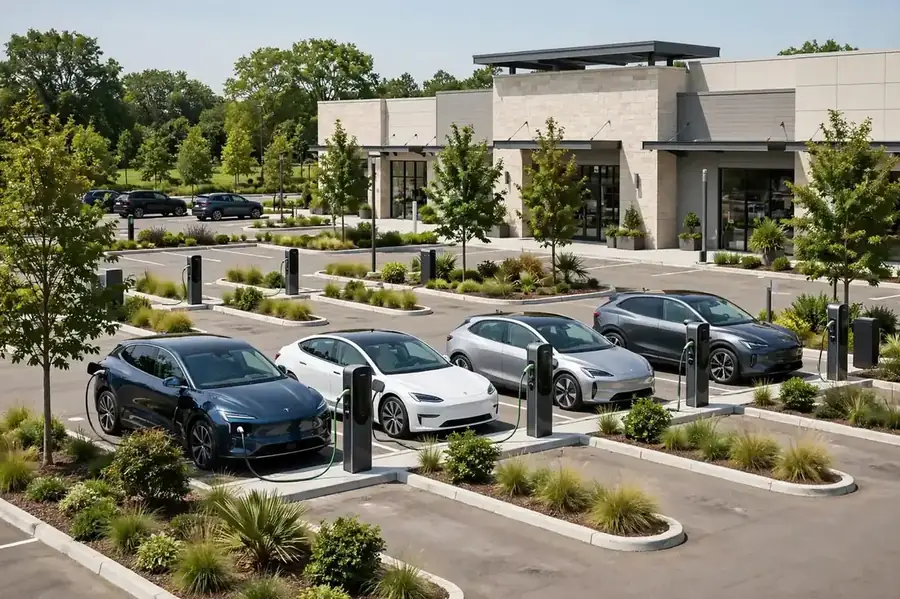
Retail centers along east Kellogg, hotels near the airport and along major corridors, and restaurants and entertainment venues use charging as a guest amenity and a reason for drivers to choose their location and stay longer. Dwell times are shorter than a workplace — one to three hours is common — so placement near entrances, clear signage, and simple access matter more than raw port count. Hotels increasingly find that overnight guests filter booking choices by whether charging is available.
Apartments and Multifamily Properties

Multifamily charging is its own category, covered in more detail below. In brief: residents need reliable overnight charging where they live, dwell times are long, assigned versus shared parking changes the design, and billing and access must be handled fairly across many households.
Auto Dealerships and Fleet Depots
Dealerships along Wichita's auto retail corridors need charging for inventory, service, and customers taking delivery, sometimes including higher-power DC fast charging alongside Level 2 units. Businesses operating delivery, service, or municipal fleets need charging designed around return times and departure schedules — how many vehicles must be ready by a set hour, how charging can be staggered overnight, and how the depot layout supports cable reach and vehicle flow.
Parking Lots Were Not Designed for Charging Loads

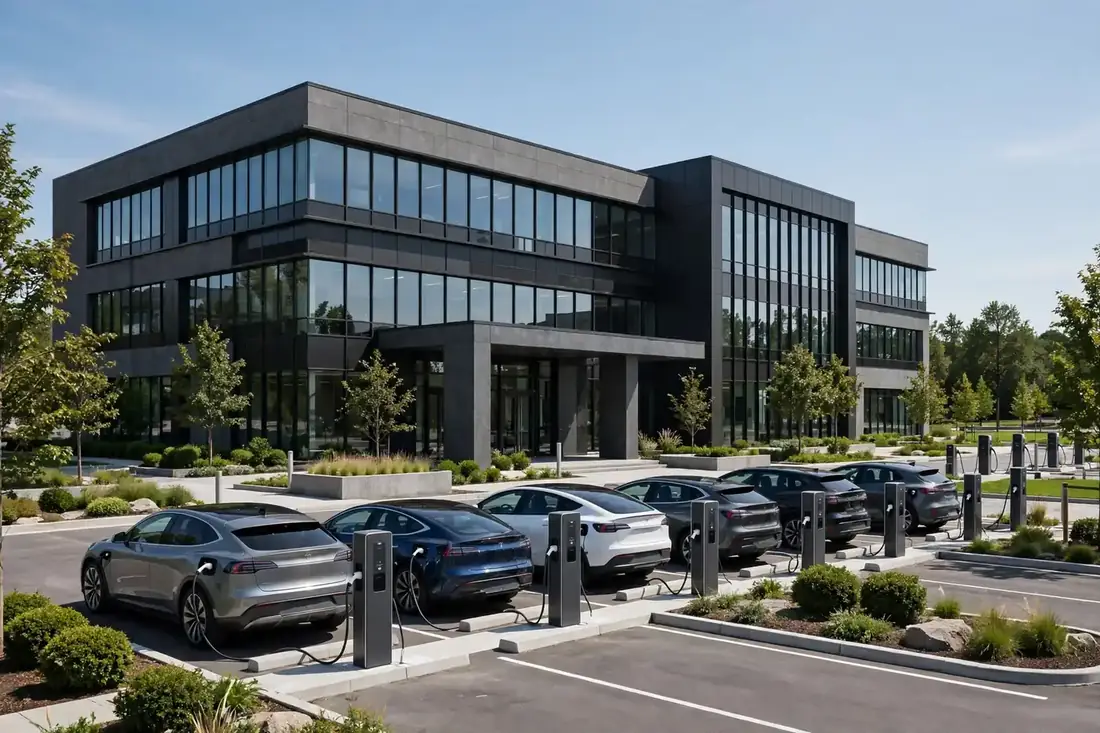
The core problem on most commercial sites is a mismatch between what the parking lot was built for and what charging asks of it.
Electrically, a bank of chargers is a large continuous load. Ten Level 2 ports charging at once can draw a significant portion of a small commercial building's entire service, and many Wichita buildings — particularly older retail and office stock — have limited spare capacity once heating, cooling, lighting, and tenant loads are counted.
Physically, chargers need to be where cars park, often far from the electrical room. Trenching or boring across a lot, routing conduit, protecting equipment with bollards or wheel stops, and keeping accessible routes clear shape a project's complexity far more than the charger hardware itself.
Operationally, an unmanaged installation creates friction: users monopolizing ports, no way to recover electricity costs, and no visibility into whether equipment is working. Planning access, networking, and turnover expectations at the design stage prevents most of these issues.
Load Studies: The Starting Point for Every Commercial Project

A commercial load study is the equivalent of the residential load calculation, scaled up. The electrician reviews the property's electrical service size, panel and switchgear capacity, existing peak demand — often using utility demand history where available — and the loads of current tenants and equipment.
The study answers three practical questions:
- How much charging can the existing service support today? This sets the size of a first phase that avoids a service upgrade.
- At what point would a service upgrade or new transformer be needed? Knowing this threshold in advance lets a property plan capital spending instead of being surprised by it.
- Can shared power close the gap? In many cases, intelligent power sharing lets a site install more ports than its spare capacity could support at full individual output, because not every vehicle charges at full rate for its entire session.
Commercial electrical work in the Wichita area is permitted through MABCD, and larger projects go through plan review, where the load study and one-line diagrams support the application. Starting with the study keeps the permit conversation grounded in documented capacity rather than assumptions. Properties also planning employee home charging programs can compare the residential side in the residential EV charger installation overview.
Phased, Right-Sized Installation
A well-planned commercial project is built in phases, sized to today's demand, and wired for tomorrow's growth.
Planning Port Counts
Port count planning starts with a count of current EV drivers at the property, a realistic growth estimate over the next several years, and the dwell pattern. A workplace where 12 employees drive EVs today and cars sit for eight hours needs fewer ports than a naive one-port-per-driver count suggests, because vehicles finish charging and — with basic etiquette or managed access — ports can turn over at midday. A hotel needs enough ports that a guest arriving in the evening is not routinely shut out. An apartment property needs a plan that scales with resident adoption rather than a fixed guess.
A common, practical approach is to install an initial bank of ports sized for current demand plus near-term growth, while running conduit and capacity for a future bank during the same construction window. Trenching and concrete work are the disruptive, expensive parts of a project; doing that work once and pulling additional capacity for later phases is far more efficient than re-opening the lot for every expansion.
Shared Power

Modern commercial chargers can share a fixed pool of power across a group of ports. When few cars are plugged in, each charges at full rate. When many cars are connected, the system divides power among them. Because most parked cars finish charging well before they are moved, shared power serves more vehicles from the same electrical capacity without drivers noticing a practical difference for typical dwell times. Shared power is one of the main tools that lets a property delay or avoid a costly service upgrade.
Access Control and Networking

At a general level, networked commercial chargers allow a property to control who can charge and how electricity costs are handled. Common arrangements include open access, access limited by RFID card, app, or code to employees, tenants, or guests, and driver-paid charging where the network collects payment. Networking also provides usage reporting, alerts when a unit goes offline, and the ability to set charging schedules or power limits remotely.
Non-networked chargers remain an option for simple, low-count installations where access is naturally controlled — a small office lot, for example — but most multi-port and multifamily sites benefit from networking. Your electrician and, where involved, the charging network provider can explain the options at a general level so you can choose based on how your property operates.
Placement and Accessibility
Charger placement balances electrical practicality — shorter conduit runs cost less — with driver usability. Planning considers parking layout, lighting, pedestrian routes, drainage patterns, protection from vehicle impact, and accessible design. Properties should plan with ADA-aware design in mind: locating some charging spaces on accessible routes, keeping clear space around the charger, and mounting equipment at reachable heights. Specific accessibility requirements depend on property type and project scope, and your design team confirms the applicable standards during plan review through MABCD.
Wichita Corridors and Property Patterns
Local context shapes projects in predictable ways. Downtown and WaterWalk properties often deal with structured parking or tight lots, where conduit routing and capacity in older buildings drive the design. East Kellogg retail sites typically have large surface lots — easier trenching, but longer runs from the electrical room to the most useful parking rows. Airport-area hotels prioritize reliable overnight charging with simple guest access. Multifamily properties, from Midtown to the east and west suburbs, face the resident-focused questions described below. In each case, the site assessment translates these patterns into a plan for your specific parcel, service, and lot.
How Apartments and Multifamily Properties Differ

Multifamily charging differs from workplace and retail charging in several ways:
- Residents charge at home. For a resident without a garage, on-site charging is not a perk — it is the primary way they fuel their vehicle. Reliability and fair access matter enormously.
- Parking may be assigned or open. Assigned parking can support resident-dedicated chargers with individual billing. Open parking usually calls for shared networked chargers with access control and clear use policies.
- Cost recovery is central. Properties typically choose between including charging in rent or amenity fees, billing residents through the network, or metering individual units. The electrician handles the electrical design; the billing model is a management decision the design must support.
- Phasing follows adoption. A property might start with a small shared bank near a central lot, then expand as resident EV ownership grows — with conduit placed for expansion during phase one.
What a Commercial Installation Project Looks Like
While every site differs, projects generally follow this sequence:
- Site assessment and load study. Walk the property, review electrical service and panels, map candidate charger locations, and document capacity.
- Design and proposal. Port counts, phasing, equipment type, shared-power configuration, access and networking approach, and routing are defined. You review scope and pricing directly with the electrician.
- Permit and plan review. The project is submitted through MABCD; commercial work typically involves plan review of electrical drawings and load documentation.
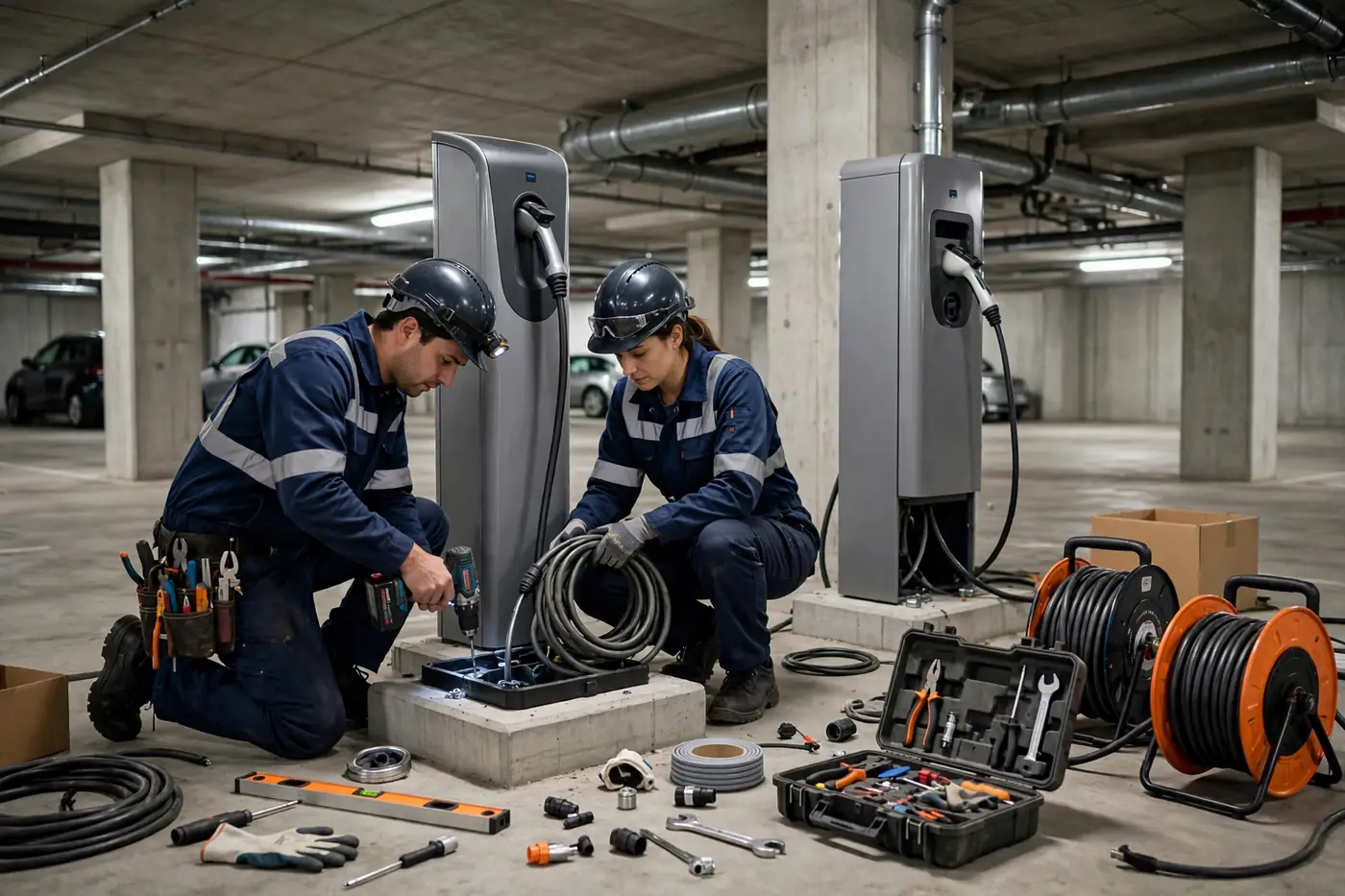
- Construction. Trenching or boring, conduit, concrete pads or mounting, panel or subpanel work, and charger installation. Work is scheduled to limit disruption to tenants, guests, and customers.
- Commissioning and networking setup. Chargers are energized, networked units are activated, access rules are configured, and the property team is shown how to view usage and spot a unit that needs attention.
- Ongoing care. Commercial chargers benefit from periodic inspection and prompt attention to damaged cables or connectors. See the EV charger maintenance guide for upkeep basics, and EV charger repair when a unit is already misbehaving.
Businesses building a broader electrification plan may also pair public-facing ports with fleet charging, or support employees with guidance on home installations such as Level 2 EV charger installation and Tesla charger installation.
How This Site Helps
This site is a referral service, not a direct service company. It connects you with an independent local electrician serving Wichita-area commercial properties. The electrician performs the assessment, designs the project, provides pricing directly to you, obtains permits through MABCD, and performs the installation. Start through the contact page, and browse the full services list and locations served.
Frequently Asked Questions
How many charging ports does my property need?
It depends on how many EV drivers use your property today, how quickly that number is growing, and how long vehicles stay parked. Workplaces can often share ports across more drivers because cars dwell all day and charging finishes before the shift ends, while hotels and apartments need enough ports that arriving drivers are not regularly shut out. A site assessment counts current demand, applies a growth estimate, and usually recommends a phased plan — an initial bank sized for now, with conduit and capacity placed for a future expansion.
Who typically pays for the electricity at workplace chargers?
The property decides. Common arrangements are host-paid charging, where the employer covers electricity as an employee benefit; driver-paid charging, where employees pay through the charging network; and hybrid approaches, such as a set amount of host-paid charging time followed by driver-paid charging to encourage turnover. There is no single standard — your electrician and network provider can set up the arrangement that fits your policy, and networked chargers handle the tracking and payment mechanics.
Can chargers be added in phases as demand grows?
Yes, and phasing is the recommended approach for most properties. Phase one installs the ports current demand justifies, while the construction work — trenching, conduit, and electrical capacity for future ports — is sized for later phases at the same time. Adding ports later then becomes a much smaller job. Shared power also helps, because a group of ports can serve more vehicles from the same capacity as adoption grows.
Do apartment properties handle EV charging differently from offices?
Yes. Residents rely on property charging as their primary fueling, park overnight, and need fair, reliable access across many households, so multifamily design centers on assigned versus shared parking, resident access control, and how electricity costs are billed or recovered. Offices focus more on employee access during work hours and midday turnover. The electrical work is similar, but the access, billing, and phasing plans are built differently, which is why multifamily properties get a dedicated design conversation during assessment.
What does a commercial site assessment look at?
An assessment reviews your electrical service size and spare capacity, panel and switchgear condition, where chargers could be placed relative to the electrical room, conduit and trenching routes, parking layout and accessible routes, lighting, equipment protection, and how access control and networking would work for your users. It also documents existing demand so the load study can size the first phase and identify the point at which a service upgrade would be needed. The result is a phased plan with defined scope that you review directly with the electrician.
Plan Charging That Fits Your Property
Commercial charging works best when it is designed around your property's electrical reality and your users' parking patterns — not copied from another site. An independent local electrician connected through this site can assess your Wichita property, run the load study, and lay out a phased plan you can act on now and expand later. Reach out through the contact page to schedule an assessment.