How Derby Homes Are Wired for Charging
The first question on almost every Derby job is not which charger to buy. It is what the panel can support. Ranch-era homes near the base were often built with 100-amp or early 150-amp service, plenty for the loads of that time. Add a modern kitchen, an HVAC system, and a 40- or 50-amp charging circuit, and the math gets tight. That does not rule out home charging, but the electrician will start with a load calculation before recommending a setup.
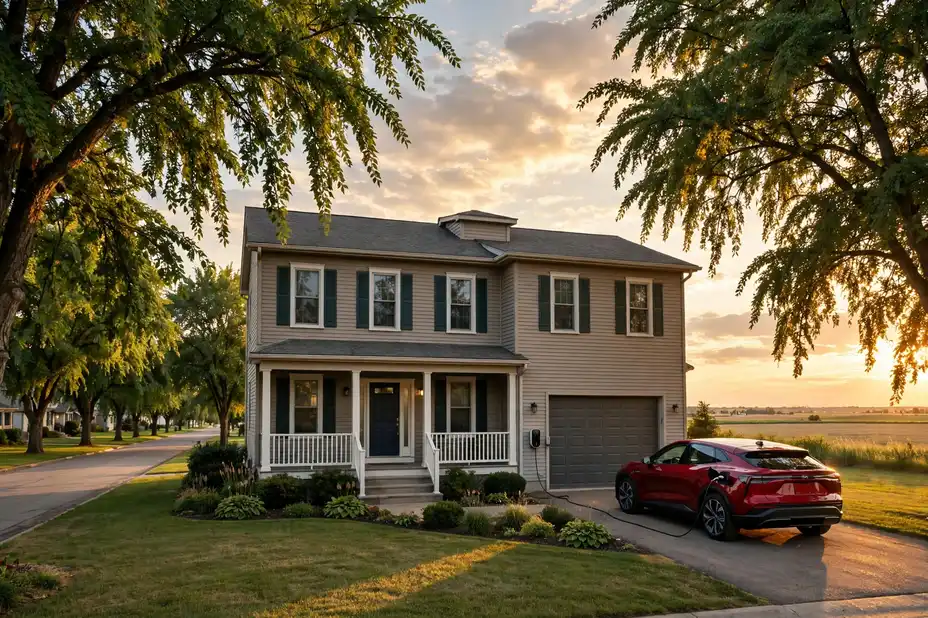
Newer construction on Derby's north and east edges is usually easier. Many of those homes have 200-amp panels with open breaker spaces, and the garage often sits on the same wall as the panel or a short run away. That keeps the work straightforward: a dedicated 240-volt circuit, conduit where the code requires it, and the charger mounted where the charge port will actually be when you park.
Detached garages deserve a mention because Derby has so many. A charger in a detached building may need a trench or an overhead feed from the house panel, and distance changes the wire size and scope. An electrician who walks the property first can say whether feeding the detached garage makes sense, or whether a charger on the house is the smarter layout. If a panel change is part of your picture, the electrical panel upgrade for EV chargers page explains that work.
Choosing Between a Wall Connector and an Outlet in Derby

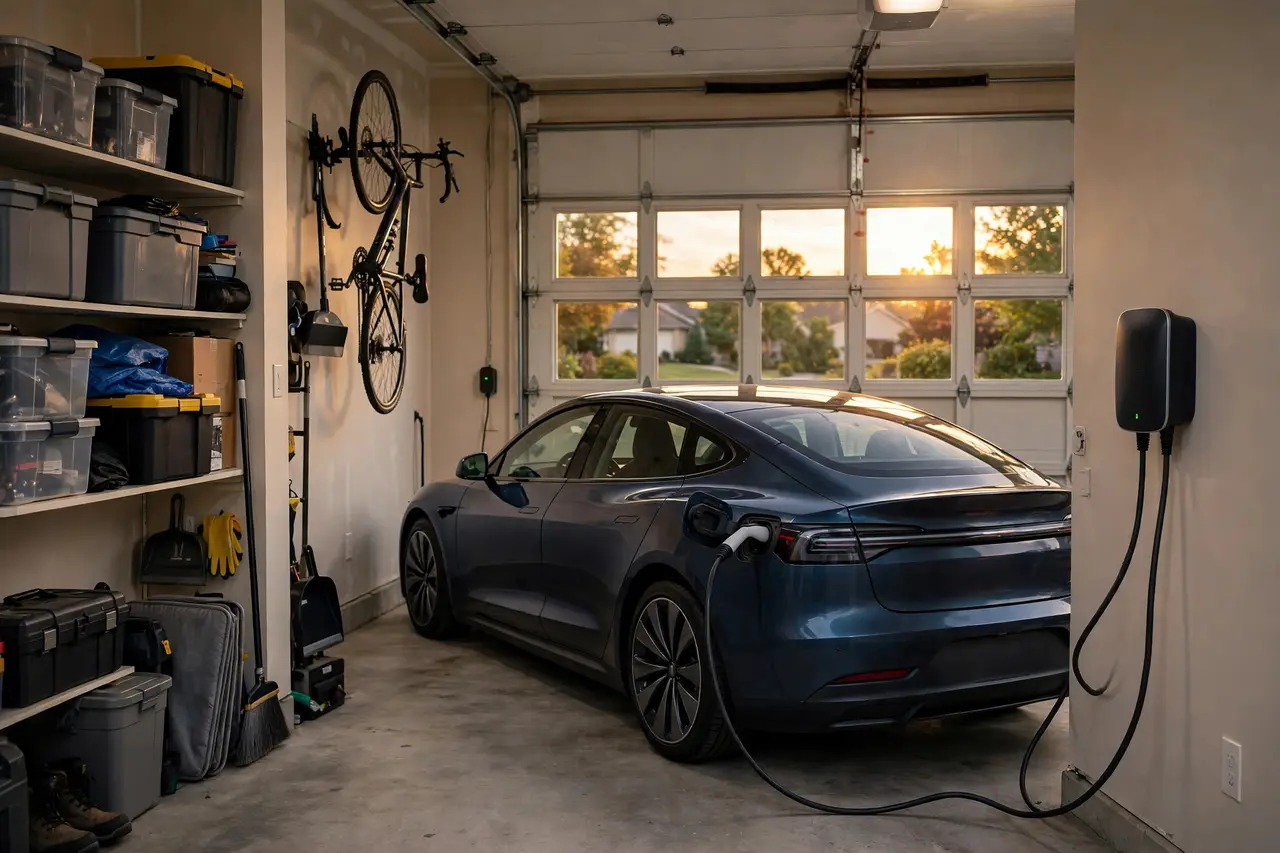
Derby drivers tend to land on one of two setups. The first is a hardwired wall connector — a Tesla Wall Connector or a similar unit from another brand — wired directly into its own circuit. Hardwired units can deliver higher amperage, have no plug connection to wear, and look tidy on the garage wall. Tesla owners here often start with the dedicated Tesla charger installation route for those reasons.
The second is a NEMA 14-50 outlet installation — a 240-volt receptacle, similar to an electric range outlet, into which a plug-in charging cord connects. This appeals to households that may move within a few years, common for military families, because the cord travels with you and the outlet stays as a useful garage feature.
Neither choice suits every house. Charging speed depends on circuit size and the vehicle's onboard charger, not just the hardware on the wall. A 50-amp circuit refills most EVs overnight with room to spare — what matters for a K-15 commute. Your electrician can compare both layouts against your panel and parking habits in the initial conversation.
Where the charger should sit in a Derby garage

Placement sounds minor until you live with it. The goal is a cable that reaches the charge port without crossing a walkway or forcing you to back in nightly if you prefer pulling in nose-first. In larger newer garages the panel location usually decides — the closer the mount, the simpler the run.
What Installation Day Looks Like in Derby
Most single-charger Derby installs follow a familiar rhythm. The electrician arrives, confirms the panel location and charger position with you, and shuts off power to the circuits involved. The run is measured, conduit or cable is routed through the wall, attic, or ceiling as the layout dictates, and the outlet or wall connector is mounted and wired.
A straightforward job in a newer Rock Road subdivision — panel in the garage, charger on the same wall — can wrap up in a few hours. An older home near the base, or a detached garage across the yard, takes longer because the route itself is the project. Either way, the electrician tests the circuit under load, shows you how the charger starts and stops a session, and points out its breaker before leaving.
Preparation is light: clear the wall where the charger will go, make the panel accessible, and decide where each vehicle normally parks. Drivers comparing charger levels can read about Level 2 EV charger installation, which differs greatly from the slow trickle of a standard outlet.
Permits for Derby Addresses

Electrical work of this kind in Derby is permitted work. For Sedgwick County suburbs like Derby, permits are typically through MABCD — the Metropolitan Area Building and Construction Department — which handles permitting and inspections for much of the Wichita metro, though some work is coordinated through the city's own desk depending on scope. Your electrician confirms which applies to your address and pulls the permit as part of the job.
The permit is not paperwork for its own sake. An inspector verifies that the circuit is sized correctly, breaker and wire match, grounding is right, and the work follows the locally adopted electrical code. Our Wichita EV charger permit guide explains the metro process.
Derby Driving Patterns That Shape Charger Choice

Derby is a commuter city. Many residents drive north on K-15 or Rock Road into Wichita for work, appointments, and shopping, then return the same evening. That pattern — 25 to 40 miles on an ordinary day — is exactly what home Level 2 charging handles comfortably. You plug in when you get home, and the car is ready before the next morning's school run.
Weekends add miles in bursts: trips to McConnell, youth sports across the south metro, drives to Mulvane or El Dorado. A charger restoring range at 240 volts makes a low Saturday-evening battery a non-issue by Sunday morning. Two-EV households, increasingly common in the newer subdivisions, sometimes install one circuit with power sharing, or two circuits where the panel allows. Winter helps too: a garaged car charging overnight can precondition its cabin while plugged in.
Nearby Communities We Also Connect

Drivers just south in Haysville share many of Derby's older-housing panel questions, while Mulvane to the southeast mixes in-town homes with acreage properties. Browse the full service area on the locations page, or start with the residential EV charger installation overview for the general picture.
Frequently Asked Questions
Our Derby home is near McConnell and was built in the 1970s — can it handle a charger?
In most cases, yes, though the route may differ from a newer home. Ranch homes from that era often have 100-amp panels already carrying a full load, so the electrician may recommend a panel upgrade, a lower-amperage charger setting, or a load-management device that pauses charging when the house draws heavily. The starting point is a load calculation, not a guess.
We are a military household and may move in three years — what setup makes sense in Derby?
A NEMA 14-50 outlet is often the practical pick for a household expecting to move. Your portable charging cord comes with you to the next assignment, and the outlet remains in the garage as a documented improvement for the next owner. A hardwired wall connector can also be taken along, but removing and reinstalling it means an electrician visit at both ends.
How far can the charger be from the panel in a Derby detached garage?
Distance is workable, but it drives the scope. Longer runs need larger wire to limit voltage drop, and a detached garage usually means trenching conduit underground or running an overhead feed, both of which add time compared with an attached garage. An electrician who sees the yard and panel location can weigh both layouts for your property.
Do Derby installs need an inspection after the work is done?
Yes — permitted electrical work includes an inspection step. For Derby addresses, permits are typically through MABCD, and the inspector checks the new circuit, breaker sizing, and charger connection before the job is closed out. Your electrician schedules this and lets you know whether you need to be home. Keep the permit documentation with your house records for when you sell or refinance.
Can one Derby garage charge two EVs on the same night?
Yes, in two common ways. Two separate circuits work when the panel has the capacity, more common in Derby's newer subdivisions. The alternative is one circuit with two connectors that share power — when both cars are plugged in they split the amperage, and when one finishes, the other gets the full rate. For most two-EV households, sharing is plenty, since both cars sit parked eight or more hours overnight.
Ready to Talk Through Your Derby Garage?

Every Derby home starts from a different place — a 1970s panel near the base, a roomy new garage off Rock Road, a detached shop behind the house. The fastest way to a clear answer is a short conversation about your address, panel, and vehicle. Reach out through the contact page and Wichita EV Charger will connect you with an independent local electrician who can outline the installation from permit to first charge.