How Tesla Home Charging Works
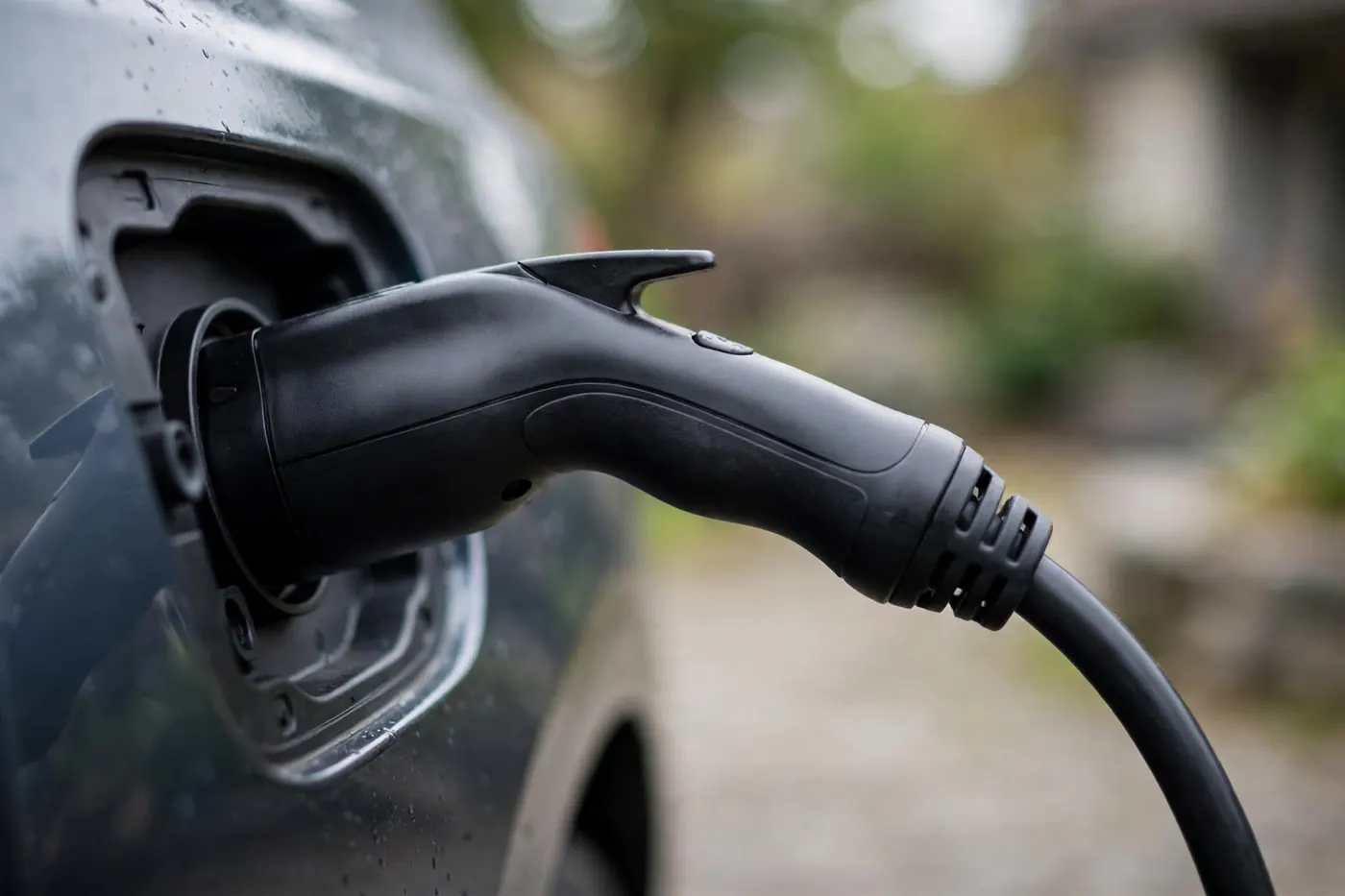
Tesla vehicles charge at home through the NACS connector, the compact plug design Tesla developed and that other automakers are now adopting. For Level 2 home charging, you have two main paths: a hardwired wall unit mounted permanently in the garage, or the portable mobile connector plugged into a 240V outlet. Both deliver 240V charging. They differ in speed, permanence, and daily convenience, and the FAQ at the end of this page compares them directly.
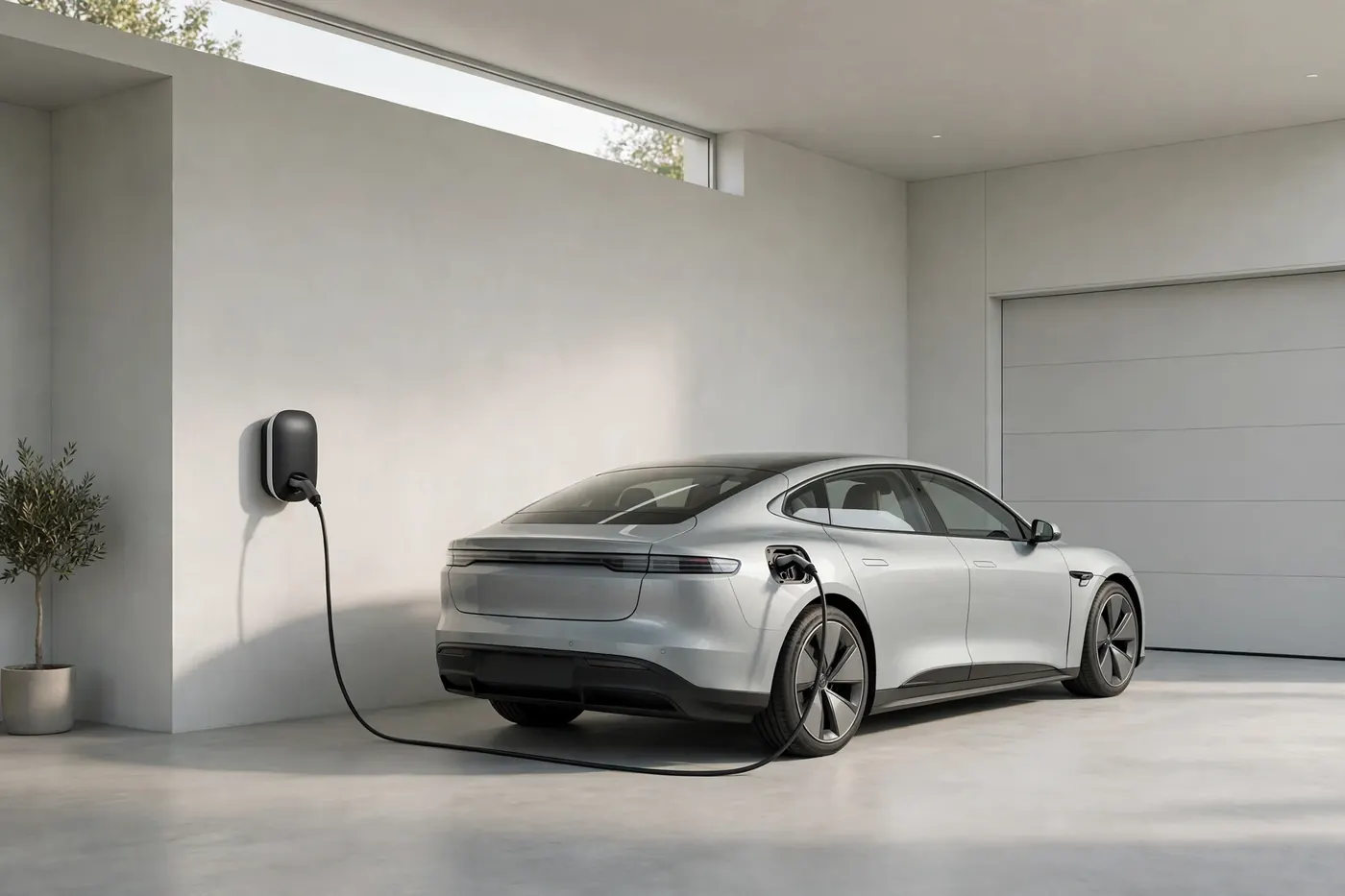
A hardwired wall unit is the setup most Wichita Tesla owners choose for daily use. Wired directly to its own circuit with no plug in between, it can deliver up to 48 amps of continuous charging on a 60-amp circuit, which translates to roughly 44 miles of range added per hour on models that can accept that rate. Smaller circuits are also common and still fast: a unit configured for 40 amps on a 50-amp circuit adds roughly 37 miles per hour, and 32 amps on a 40-amp circuit adds roughly 30 miles per hour. Your actual speed also depends on the vehicle's onboard charger limit, so the electrician will match the circuit to both the wall unit and the car.
If you are comparing this with a general setup, our Level 2 EV charger installation page covers 240V charging across all brands, and our residential EV charger installation page covers the full home installation process step by step.
Relying on the Mobile Connector Every Night

Many owners start with the mobile connector on a standard 120V outlet. At roughly 3 to 5 miles of range per hour, it can work for short commutes, but a longer Wichita day — west side to Derby, or a round trip to Hutchinson — leaves little margin. Plugging into a 240V outlet improves speed, yet a daily plug-in routine has its own friction: the connector lives in the trunk or on the garage floor, the outlet itself may be a standard-grade dryer receptacle not built for daily insertion cycles and hours of continuous EV load, and you have nothing mounted, organized, or ready when you pull in.
There is also an electrical problem. A Tesla charging at high amperage for six to ten hours is a continuous load, very different from a dryer that cycles. Circuits, breakers, and connections must be sized and torqued for that duty. Adding a wall unit to a panel that is already near capacity, without a load calculation, invites nuisance trips at minimum. A planned installation avoids the makeshift phase entirely.
A Hardwired Wall Unit on Its Own Circuit

The solution is a wall unit hardwired to a dedicated circuit sized for continuous load, mounted where your Tesla actually parks. Hardwiring removes the plug and receptacle from the circuit, which allows the full 48-amp charging rate on a 60-amp circuit and gives you a clean, permanent station: cable coiled on the unit, connector holstered, ready every night.
During the site visit, the electrician confirms panel capacity with a load calculation, selects breaker and wire size for the run length, chooses the mounting location based on your charge port position and parking direction, and handles the permit through MABCD — the Metropolitan Area Building and Construction Department, which manages Wichita-area electrical permits. A new 240V circuit needs that permit and a final inspection.
If your panel cannot support a 60-amp circuit, you still have options: configure the unit for 40 or 50 amps, or use load management. If the service needs more capacity, an electrical panel upgrade for your EV charger may be the right step.
NACS, J1772, and Mixed-EV Households

Not every Wichita garage holds only Teslas. A household might pair a Model Y with a Ford, Hyundai, or Chevy that uses the J1772 connector for Level 2 charging, or a plug-in hybrid with a small battery. Planning for that mix at installation time avoids buying duplicate equipment later.
One option is a universal-style wall unit that includes both connectors — a primary NACS cable plus a J1772 connector docked in the unit — so either vehicle can charge from the same station on different nights. Another option is two separate units, each with its own connector, sharing power as described in the next section. Adapters exist in both directions, but a charger that natively matches each car is simpler for daily use and avoids an adapter becoming a permanent, wear-prone part of the circuit.
Our NACS vs. J1772 guide explains the connector landscape in plain terms, including what is changing as more brands adopt NACS. If your second vehicle is not a Tesla, also see our general services overview for non-Tesla home setups, including NEMA 14-50 outlet installation for plug-in charging.
Power Sharing for Two Teslas

Two Teslas in one garage do not automatically need two full-size circuits. Tesla wall units support power sharing: multiple units connected on a single appropriately sized circuit communicate with each other and divide the available current. When one car is charging alone, it can draw the full configured amount. When both cars plug in, they split it. As one vehicle finishes or tapers near full, the other speeds up automatically.
For most two-Tesla households in Wichita, this works well because both cars sit parked for eight to ten hours overnight — far longer than either needs at shared speed to replace a typical day's driving. Power sharing also reduces panel demand, which matters in homes with 100- or 150-amp service where two separate 60-amp circuits simply do not fit the load calculation.
Tell the electrician during the first visit if a second Tesla is likely, even if it is a year or two away. Sizing the shared circuit, running conduit that anticipates the second unit, and mounting the first unit where a second mounts cleanly are all easier decisions on day one. Households weighing this against two independent circuits can also review our blog guide to hardwired versus plug-in charging for how fixed equipment compares over time.
Wi-Fi Commissioning and Smart Features

Modern Tesla wall units are commissioned over Wi-Fi during installation. The electrician connects the unit to your home network, sets the circuit amperage in software to match the breaker and wiring actually installed, updates firmware, and confirms the unit reports correctly in the app. That amperage setting is not a cosmetic step — it tells the unit how much current it is allowed to draw, and it must match the physical circuit.
Day to day, Wi-Fi enables charge scheduling, session monitoring, power-sharing coordination, and firmware updates. It is a convenience layer, not the charging itself — see the FAQ below for what happens without a connection. Before installation day, check that your garage has a usable Wi-Fi signal where the unit will mount, so commissioning and updates run smoothly.
Placement in the Garage
Tesla charge ports sit at the rear corner of the vehicle, so placement planning starts with how you park. If you pull in nose-first, the port ends up near the garage door end of the car; if you back in, it ends up near the front wall. The wall unit should mount so its cable — commonly around 24 feet on home wall units — reaches the port with slack, without crossing your walking path or lying where tires roll over it nightly.
Also consider the second bay, storage, and door swing. A unit mounted between two bays can sometimes serve either car with one cable, which suits households that rotate parking. The electrician will walk through these options in your garage during the assessment. For broader placement guidance, including driveway and detached-garage setups, our residential installation page covers garage, driveway, and carport layouts, and our locations page lists the Wichita-area communities we connect owners in.
Permits, Panel Capacity, and What to Expect on Installation Day

Every Tesla wall unit project in Wichita follows the same backbone as other Level 2 work. The electrician performs a load calculation, pulls a permit through MABCD for the new 240V circuit, completes the installation, and schedules the inspection. Our EV charger permit guide for Wichita details each step.
A straightforward install — panel in the garage, capacity available, short run — often takes a few hours. Panel upgrades, long runs through finished walls, or a feed to a detached garage extend the work. On the day, expect the power to the panel area to be off briefly while the breaker and connections are made, followed by testing: the electrician will plug in your Tesla, confirm the charge rate matches the configured circuit, complete Wi-Fi commissioning with you, and show you scheduling in the app before wrapping up.
If an older wall unit stops working or you are upgrading from an earlier setup, help is available through EV charger repair and EV charger replacement. Facility managers adding Tesla charging for fleets or customers should look at commercial EV charging station installation instead, since those projects involve different load and access planning.
Frequently Asked Questions
Can one wall unit charge two Teslas?
One wall unit has one cable, so it charges one Tesla at a time — but for many households that is enough if you rotate nights or move the cable between cars. When both cars need regular nightly charging, the stronger setup is two wall units using power sharing on a single circuit, dividing current automatically so both cars charge overnight without a second full circuit.
Your electrician can help you decide based on both drivers' daily mileage. Two modest commutes rotate easily on one unit. Two long commutes point toward power sharing. Either way, planning for the second car during the first installation is far simpler than retrofitting later.
Does a Tesla wall charger work with non-Tesla EVs?
It depends on the unit's connector. A standard NACS wall unit charges Teslas natively, and newer non-Tesla vehicles built with a NACS port can also use it. Vehicles with a J1772 port need either an adapter or a universal-style wall unit that includes a J1772 connector alongside the NACS cable, which is the cleaner answer for mixed households.
If your garage holds both a Tesla and a J1772 vehicle, mention it during the site visit. The electrician can recommend a single universal unit, two units with power sharing, or a combination that matches how often each car needs to charge. Our NACS vs. J1772 guide covers the details.
What size circuit does a Tesla home charger need?
The most common full-speed setup is a 60-amp circuit, which allows the wall unit to deliver 48 amps continuously — EV circuits are sized so continuous draw stays at 80 percent of the breaker rating. That delivers roughly 44 miles of range per hour on models that can accept it. Smaller circuits are perfectly valid: 50-amp circuits support 40-amp charging, and 40-amp circuits support 32-amp charging, both still much faster than a household outlet.
The right size depends on your panel capacity, your daily mileage, and your vehicle's onboard charger limit. Bigger is not automatically necessary — a 40-amp circuit that refills your commute in three hours serves you just as well overnight as a 60-amp circuit. The load calculation during your assessment determines what your home can support.
How does a hardwired wall unit compare with the mobile connector for daily charging?
The mobile connector is portable and flexible — it travels with the car and can plug into different outlets, including a 240V outlet for moderate charging speed. Its limits are daily friction and receptacle wear: you handle and stow it constantly, and a plug connection is one more point of wear under continuous load, especially if the outlet is standard grade rather than EV-rated.
A hardwired wall unit is faster at its top configuration, permanently mounted with its cable organized and ready, and commissioned for your specific circuit. Most owners who charge every night prefer the wall unit at home and keep the mobile connector in the car for travel. The two are complements, not rivals — but for the daily routine, fixed equipment wins on convenience and consistency.
Does a Tesla charger need Wi-Fi to work?
No — a wall unit will charge your Tesla without Wi-Fi once it has been commissioned and configured for its circuit. Charging itself does not depend on your home network. Wi-Fi is needed for the initial commissioning setup in most cases, and it enables scheduling, energy monitoring, firmware updates, and coordination between multiple units using power sharing.
In practice, you want Wi-Fi available in the garage even though charging can continue without it. If your signal is weak where the unit mounts, tell the electrician before installation day so commissioning goes smoothly and you keep access to scheduling and updates afterward.
Your Tesla, Ready Every Morning in Wichita

The goal is simple: a car that is charged, on your schedule, without public-station detours. A hardwired wall unit on a correctly sized, permitted circuit delivers that — for one Tesla, two sharing power, or a mixed NACS and J1772 garage.
Wichita EV Charger connects you with an independent local electrician for assessment, MABCD permit, installation, and commissioning. Compare options across our services, read installation cost factors, or reach out through our contact page to schedule a visit.