


Pairing Replacement With Other Electrical Work

Because an electrician is already on site and the charger circuit is already open, replacement visits pair efficiently with related work:
- Adding a second charger. With capacity confirmed, a second circuit can be added during the same project window, sometimes sharing a load management system so both vehicles charge overnight within the panel's limits.
- Panel work. If the circuit re-check reveals a full or aging panel, combining the replacement with work described on the electrical panel upgrade page avoids repeat visits and lets the new charger be commissioned on the new panel.
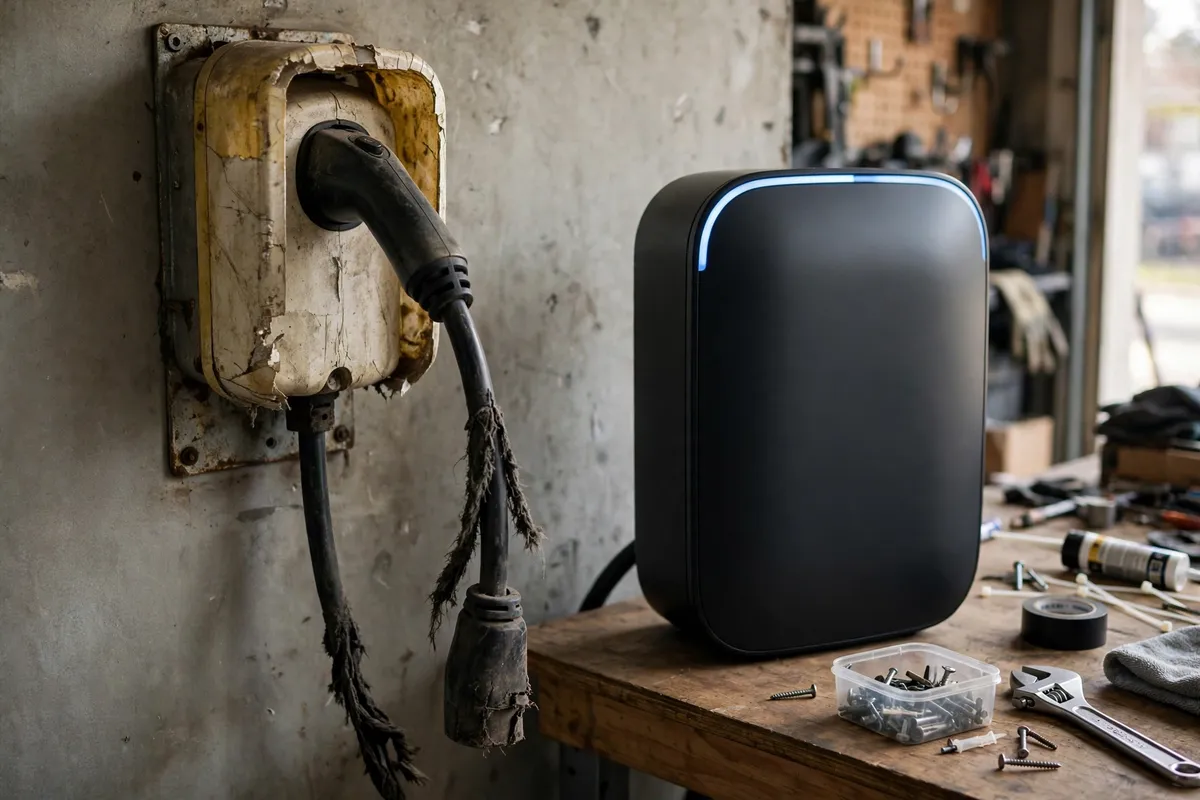
- Outlet replacement. Plug-in installations with a worn or heat-marked outlet should have the outlet replaced with the charger — installing a new unit on a compromised outlet recreates the original problem.
- Relocation. Moving charging to a different wall, a different garage bay, or an exterior-rated location is easiest to do at replacement time, while circuits are being reworked anyway.
For help deciding whether your situation calls for repair, replacement, or an upgrade, the guide on when to replace or upgrade an EV charger walks through the decision factors, and the installation cost factors guide explains what drives project scope without one-size-fits-all figures.
Choosing the Replacement Charger
Homeowners supply chargers in different ways — some purchase a specific model in advance, others ask the electrician for guidance first. Either way, a short conversation before purchase prevents mismatches. Key points to align:
- Connector type matched to your vehicle: NACS or J1772.
- Output matched to your vehicle and circuit. A charger larger than your car's onboard charging capacity adds no speed; a charger larger than your circuit must be configured down or paired with circuit work.
- Hardwired versus plug-in, based on amperage, location, and whether you value the flexibility to unplug the unit later.
- Smart features you will actually use — scheduling, usage tracking, and load sharing for two-charger homes — rather than features that complicate setup.
- Outdoor rating if the charger will live outside or in an unconditioned space exposed to Kansas weather swings.
Mention your vehicle, your current charger, and what you are hoping will improve when you call. That information lets the electrician confirm circuit compatibility before the visit.
How This Site Helps
This site is a referral service, not a direct service company. It connects you with an independent local electrician in the Wichita area who evaluates your circuit, performs the replacement, and handles any required permit through MABCD. You discuss the charger choice, scope, scheduling, and pricing directly with the electrician. Start through the contact page, and browse the full services and locations pages for related work.
Frequently Asked Questions
Can a new charger reuse my existing circuit?
Often, yes — if the existing circuit is correctly sized for the new charger's amperage setting, the wiring and connections are in good condition, and the charger location stays the same. Reuse is most likely when the new unit is the same size or smaller than the old one. If the new charger is higher-output, the old circuit shows heat damage or wear, or the location changes, new wiring or circuit corrections will be part of the project. The electrician verifies all of this during the circuit re-check before the new unit is connected.
I switched from a Tesla to another brand (or the reverse) — do I need a new charger?
Not always. Adapters between J1772 and NACS connectors exist, and many drivers use one daily without issue, so a vehicle switch does not automatically require a new charger. Replacement becomes attractive when you prefer a native connector without an adapter, when your new vehicle can charge faster than your old charger delivers, or when your old charger is aging anyway. An electrician can confirm your existing circuit supports whichever charger you choose and install a native-connector unit if you decide to switch.
What happens to my old charger after replacement?
That is your choice. A working charger removed for an upgrade can be kept as a spare or passed along, and the electrician can tell you honestly whether the unit is in condition to reuse. A failed unit — especially one with cable damage or heat damage — should be disposed of rather than reused; electronic waste collection options in the Wichita area accept equipment of this type, and your electrician can advise on the practical route for your unit. Mounting hardware and the old circuit components are handled as part of the replacement work.
Can replacement be the moment to add a second charger?
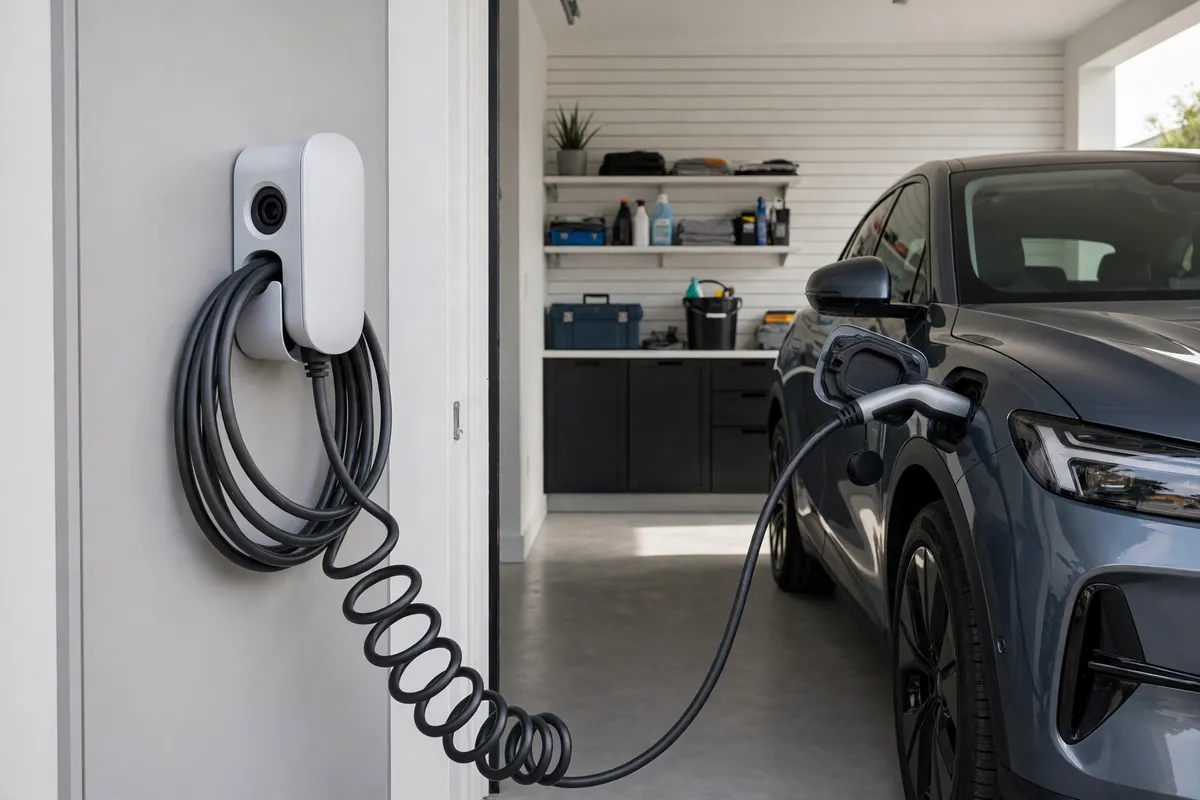
Yes, and it is often the most efficient moment. The electrician is already evaluating your panel capacity and the existing charger circuit, so adding a second circuit — or setting up two chargers with shared power or load management — can be planned and completed in the same project. Whether your panel can support two chargers at full output, or whether load management should balance them overnight, comes out of the same capacity review that guides the replacement itself.
How long does a charger replacement visit take?
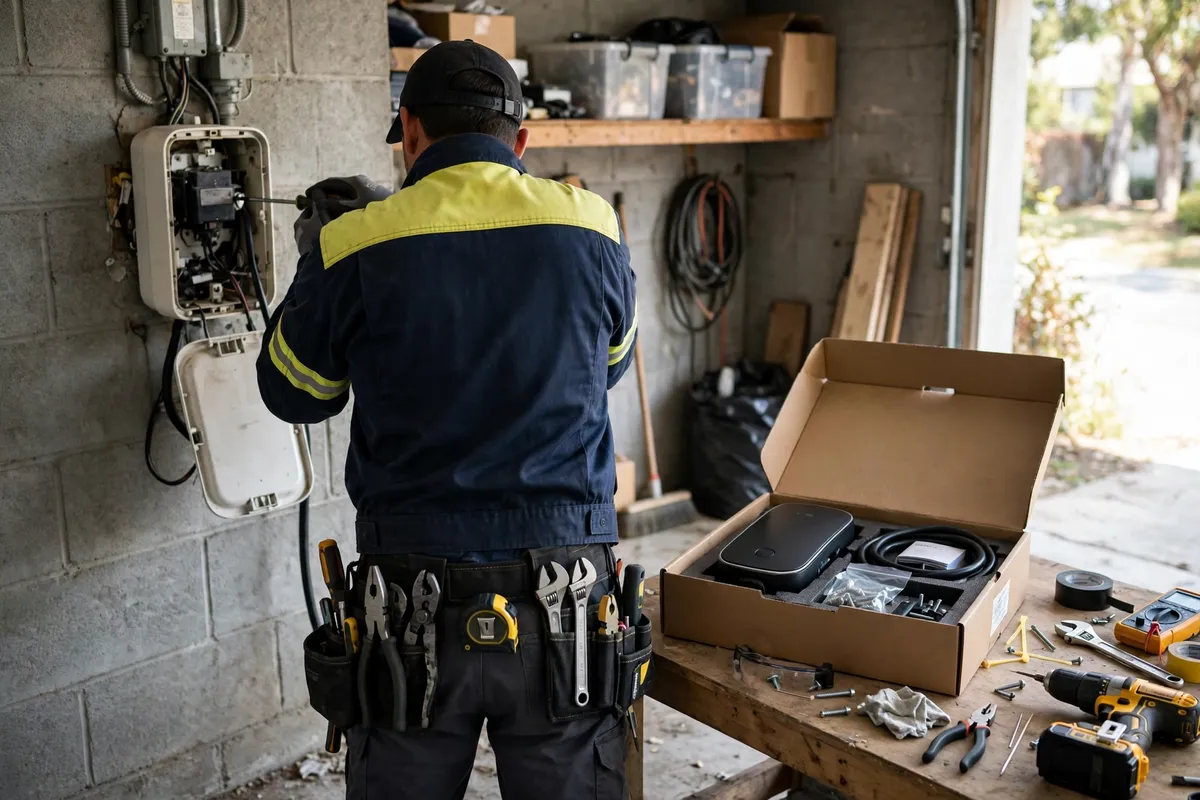
A straightforward replacement that reuses a verified circuit — removing the old unit, mounting the new one, and commissioning it with a test charge — is typically completed in a single visit of a few hours. Projects that add new wiring, relocate the charger, add a second circuit, or include panel work take longer and may involve a permit and inspection through MABCD. Your electrician will outline the expected timeline for your specific scope before work begins.
Replace Your Charger With Confidence in the Circuit Behind It
A new charger performs only as well as the circuit feeding it. An independent local electrician connected through this site will verify your existing wiring, reuse what is sound, correct what is not, and commission your new charger so the first overnight charge simply works. Reach out through the contact page to get connected and describe your current charger and vehicle — that head start makes the replacement visit faster and smoother.